
Kostas Read It, We Understood!
A gravestone in Amasra Museum's garden is written in Greek letters but Turkish words. When ship engineer Kostas tried to read it, a forgotten Karamani story surfaced.
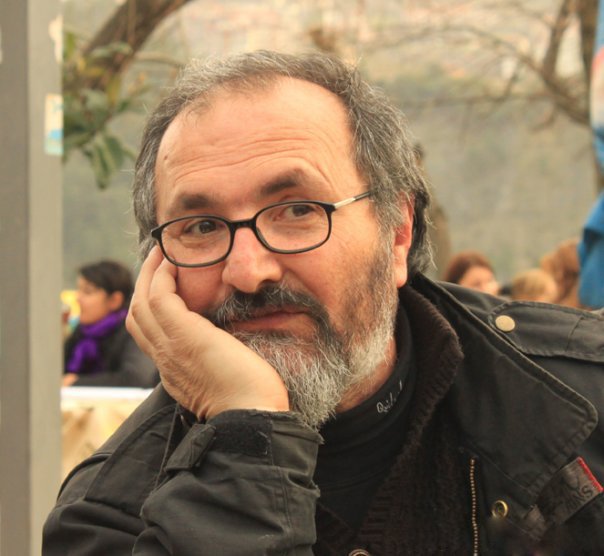
KOSTAS READ IT, WE UNDERSTOOD! Text: Hüseyin ÇOBAN Photographs: Ferhat GÜNGÖR, Hüseyin ÇOBAN
HAVE YOU EVER THOUGHT THAT YOU MIGHT BE ABLE TO READ AND UNDERSTAND WHAT IS WRITTEN ON A GRAVESTONE IN THE GARDEN OF AMASRA MUSEUM?
Knowledge is the most important treasure distilled from history. Historical artefacts that have survived from ancient times to the present will, to the extent that we can protect, understand and read them, lead us to the knowledge that is the true treasure of human history. As the Amasra Urban Culture Research group, we always produce projects to share the traces of history and culture. We work to contribute to the display of Amasra’s historical artefacts and to bring to light the city’s hidden treasures — and share them on the pages of amasra.net.
Amasra Museum displays a portion of its valuable artefacts in its garden. However, many of these need explanation and presentation. Inscriptions on numerous artefacts — from Roman-era Olympic monuments to column capitals, from Byzantine works to Ottoman gravestones — are awaiting to be read and presented to curious visitors through appropriate means.
AN OLYMPIC CHAMPION FROM AMASRA…
Would you not be curious about what is written on the gravestone of İbiş Ağa, one of the most important figures of Amasra in the last century? Or would you not want to know the verses inscribed on the gravestone of “the good housewife Lahdi who loved her husband,” or of Aemilianus, the Olympic champion from Amasra?
Amasra’s Aemilianus, from a gravestone written 1,850 years ago, addresses you with the following words:
It was my thirtieth year; my father had given me the name Aemilianus; Geminos raised me as a person of noble family. With mystic devotion I took part in the festivals celebrated with fire every three years for the god Euios, and was first in the competitions; I was skilled in wrestling, javelin, pankration, discus, running, jumping and all rhythmic ball games; for each of these my trainer put in effort; In Saturnus I surpassed Kyzikos and Pergamon and carried the Kyzikos wreath myself; But the Pergamon wreath was withheld from me by jealous Moira, and Fate destroyed my body in the land of the Dorians; My bones, however, my trainer Geminos carried to my homeland and placed in a stone chest adorned with eternal garlands.
Like many artefacts in Amasra waiting to be brought to light, many more are awaiting to be read and understood…
ONE OF THESE IS THE KARAMANI GRAVESTONE.
“THE MASTER SHIPBUILDER”
In 1993, at a symposium on the UNESCO project “Ships on the Silk Road” held on the island of Chios, I had presented a paper entitled “The Evolution of Black Sea Ships.”
In the summer of the same year, the Greek ship engineer Kostas Damianidis — coordinator of the project — and Niko, who had been awarded a prize within the UNESCO project “for restoring his traditionally built boat in accordance with the original,” wanted to come and visit us. Their aim was to see for themselves the city of Bartın with water flowing through it, the Amasra harbour that had “sheltered” sailors for thousands of years, and the Kurucaşile boat-building tradition whose fame they had heard. Moreover, they had set out on this journey aboard the prize-winning boat and had come to Istanbul. The task of guiding our seafaring friends on their Black Sea voyage aboard their Pereme-model boat — reminiscent of our own “Çektirme” type — had fallen to my wife and me.
At the end of the voyage, which coincided with stormy days on the Black Sea, we arrived at Amasra harbour and began the city tour at the Museum. For the “thing” I had been eagerly wanting to show my colleague was there. Researcher-author Necdet Sakaoğlu — the source of much of what we know about Amasra — had on one of our museum visits given us information about “Ottoman Gravestones.” The headpieces of professional people, like those of soldiers and officials, also had their own distinctive features. The floral headpieces of women gave way to turbans on the stones of state dignitaries. The headpiece on the gravestone of the “Master Shipbuilder” — an occupation that holds an important place in Amasra’s professional history — also had an interesting feature. The headpiece of Mehmet Reis’s gravestone — which we read with the help of Necdet Sakaoğlu from the Ottoman text as belonging to the Master Shipbuilder — was in the form of a classic Ottoman turban. But this headpiece was not merely a plain turban. A “flowering tree branch” was worked into the folds of the turban. Who knows — perhaps Mehmet Reis wished to pay his respects in this way to the tree branches he had been cutting and separating from their trunks for years to use in boat building.
HEADPIECES ON OTTOMAN GRAVESTONES The headpieces of Ottoman gravestones are adorned with symbols indicating the identity and character of the person interred. While women’s gravestones are decorated with flowers — which best express a woman’s delicacy and grace — the headpieces on men’s gravestones are made according to the profession and temperament of the grave’s owner.
KOSTAS READ IT, WE UNDERSTOOD! I, as a new-generation “Master Shipbuilder,” wanted to share this information with our Greek friends. I read the inscriptions on Mehmet Reis’s Ottoman gravestone to them. I showed them the “flowering tree branch” in the turban. As our tour of the museum garden continued, our guests’ attention was drawn to another gravestone. It was a Christian gravestone that had never caught our interest all these years. What made it special was that it was written in the Greek alphabet. Kostas began to read the Greek text on the gravestone.
He was reading that text, but could not understand it.
Yet we understood those plain sentences perfectly.
The alphabet was Greek, but the words were Turkish.
This was a Karamani gravestone. A Karamani gravestone is on display in the garden of Amasra Museum.
Those called KARAMANİ were people of Turkish origin who had lived in the Konya and Cappadocia regions and adhered to the Christian faith. The Karamanis — who spoke Turkish but used the GREEK alphabet as their written language — were relocated to Thessaloniki in the population exchange of 1922. The gravestone on display in the garden of Amasra Museum belongs to the Karamanis, and the text written in the Greek alphabet consists of Turkish words. By recalling letters such as Alpha, Beta and Sigma, which we learned in secondary school science classes, we can easily read this gravestone. You may be amazed to find that you understand what is told on this gravestone written in the Greek alphabet, and you may renew your respect for our lands, which possess the vast cultural heritage of human history…
Where to stay and eat in Amasra
 Story
Story Rod Fishing in Amasra and the Flavor Culture from Sea to Table
Rod fishing on Amasra's pier, seasonal Black Sea catches, and how fresh fish travels from the water straight to the table in this cherished coastal town.
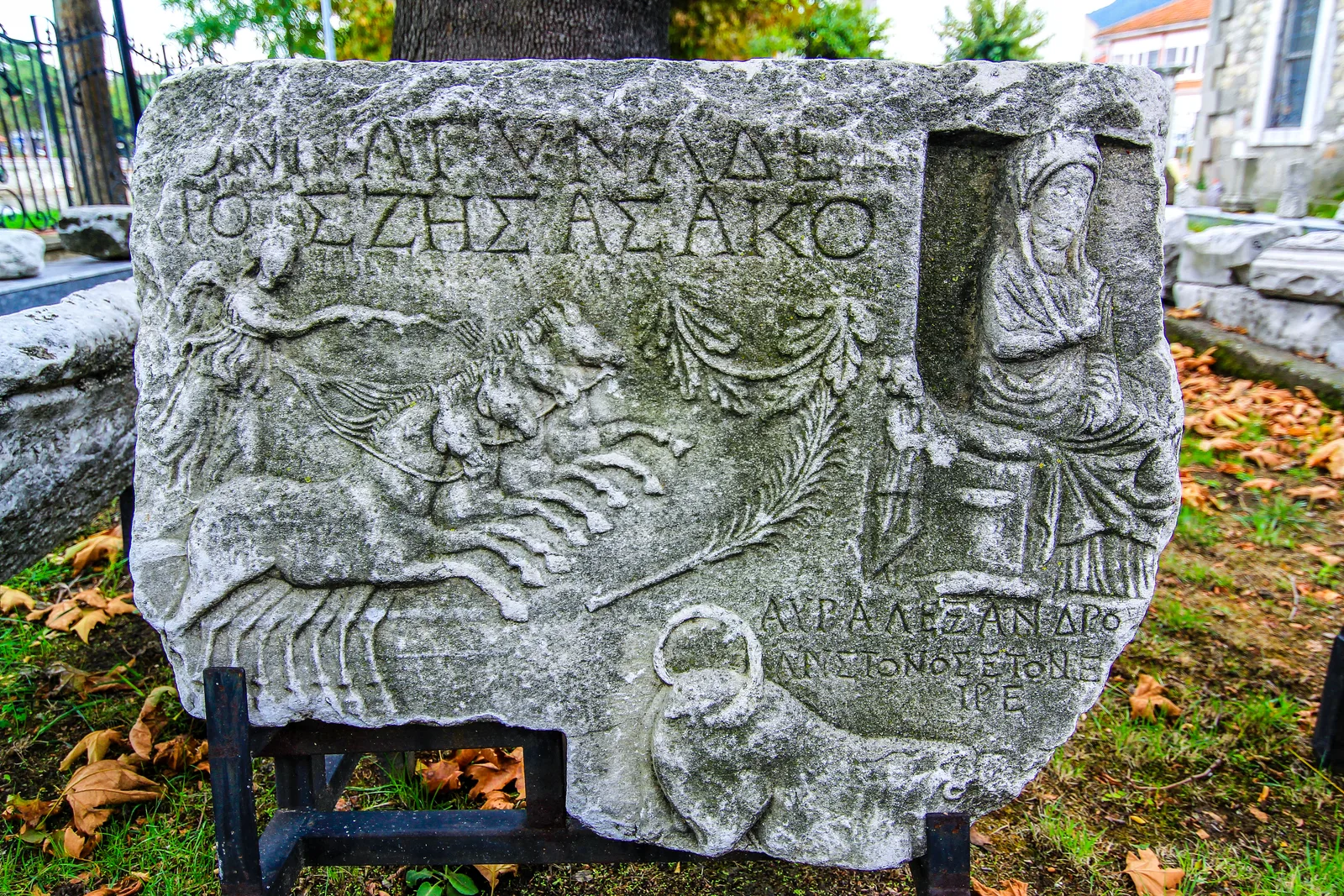 Story
Story Retracing the Footsteps of the Past at Amasra Museum
A Hadrian torso, Roman amphorae, bronze coins and an ancient garden: Amasra Museum's stone building on the Small Harbour shore preserves thousands of years of the city's memory.
 Story
Story A Black Sea Tale in the Shadow of Clouds: Amasra
Sunlight filtering through storm clouds turns the Black Sea into a living painting.