
Those Who Earn Their Bread from Stone
Amasra.net guided the İZ TV documentary crew of Wilko's Caravan to Çambu village to discover the traditional stone-slate (taş saç) quarrying tradition still alive near Amasra.
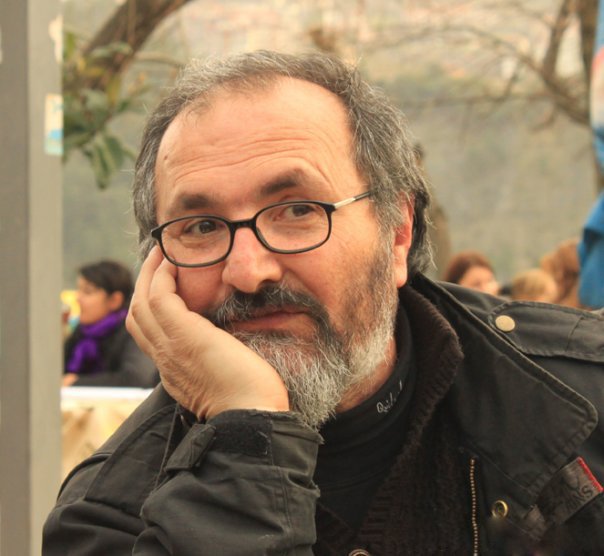
“Those who earn their bread from stone” — WHAT IS TAŞ SAÇ AND WHERE IS IT? “Amasra.net acts as guide and HIDDEN TREASURES come to light.”
The municipality and Amasra.net volunteers guided the crew of the documentary programme “Wilko’s Caravan” — broadcast on İZ TV, Digiturk channel 88 — who had come to Amasra for filming. We present to Amasra.net readers the behind-the-scenes photographs and story from a part of this work.
Photographs: İbrahim GÜRE, Hüseyin ÇOBAN Text: Hüseyin ÇOBAN
Wilco Van HERPEN and cameraman Ethem TOSUN are preparing for filming on the Amasra hilltop. The Amasra shoot will be completed and they will set off towards Kurucaşile. Local occupations and natural values in the region are the subjects that interest Wilco. İbrahim and Hüseyin are proposing a journey beyond time. We will travel to the Stone Age, then move on to the Wood Age! To go in search of the region’s hidden history, one must take to the roads, carry cameras along paths on one’s back, find the way by following the trails left by donkeys, and FIND THOSE WHO EARN THEIR BREAD FROM STONE.
After 30 km, we arrived in Çambu. Yellow-booted Mustafa came out to meet us. İbrahim made a walking stick from a hazel branch. A hazel branch wouldn’t be enough for Hüseyin; and Wilco was preparing himself mentally for the images at the destination. We are on the right track — stone mines touched by human hands have become like ponds. Here are traces of human hands. We keep coming across stones touched by human hands — the question is where and how this stone is quarried. Yes — here is the QUARRY where rounded stones are detached layer by layer. Just like Black Diamond coal, this time in the Western Black Sea, a gift from Nature to Humanity is once again a Mine. Here is the Quarry — TAŞ SAÇ (stone griddle); here is the LOCAL CRAFT we have been looking for. Here is Fedayi KAYIK of Çambu, who continues his ancestral trade, at work on a new SAC. Wilco wants to see and learn everything before his interview. And he watches as iron pegs are driven into the stone body of the earth. Here — a new block has been separated from the body of the earth. The clay stone is now in human hands. Claystone (shale): a physically sedimentary rock formed by the compaction of particles called clay, smaller than 2 microns in diameter. Ethem is documenting the moment another piece of the ancient earth passes into human hands. Here is the deep crack — the mark left by just one of the things TAKEN FROM NATURE AND GIVEN TO HUMANITY… Wilco will be presenting this valuable stone, reached by long, winding roads under difficult conditions. Now it is the turn of the loyal helpers of the Çambu workers. The Taş Saç stones — detached, shaped and cleaned — will be carried down to the village on their backs.
The work was done and the journey began. But Wilco is still full of curiosity: HOW is this TAŞ SAÇ used? Mustafa KAYIK and his brother Fedayi KAYIK satisfy Wilco’s curiosity: Taş Saç is one of the natural household utensils that Western Black Sea people have continued to carry with them from ÇAMBU to Istanbul. The MASTER COOK OF EVERYTHING FROM FLATBREAD TO ANCHOVY, FROM KÖFTE TO SAUSAGE — Taş Saç — is this time placed over a brisk fire lit with hazel twigs to cook sausage. The result is excellent, but Wilco burns his mouth on the hot sausage!
Where to stay and eat in Amasra
 Story
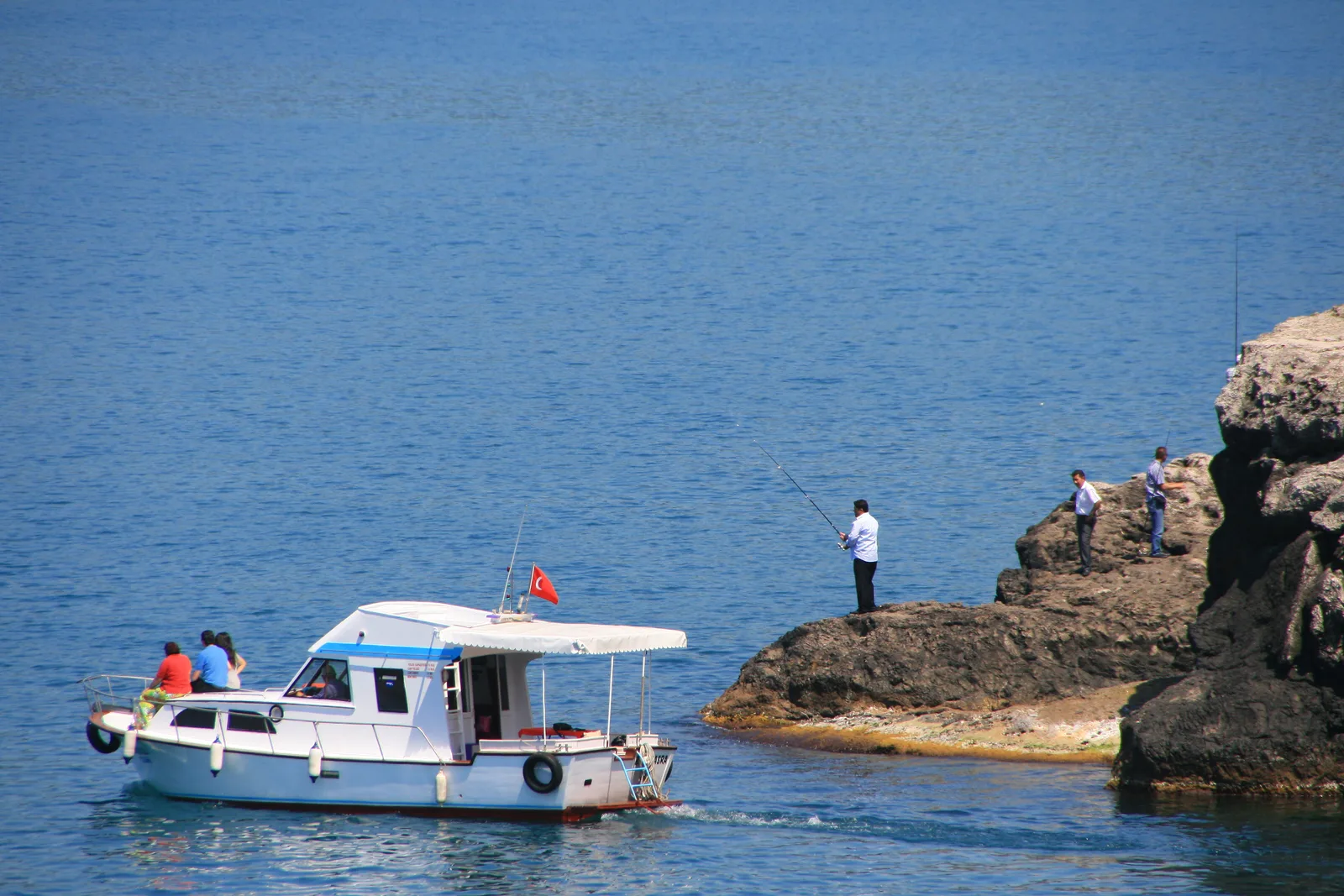
Story Rod Fishing in Amasra and the Flavor Culture from Sea to Table
Rod fishing on Amasra's pier, seasonal Black Sea catches, and how fresh fish travels from the water straight to the table in this cherished coastal town.
 Story
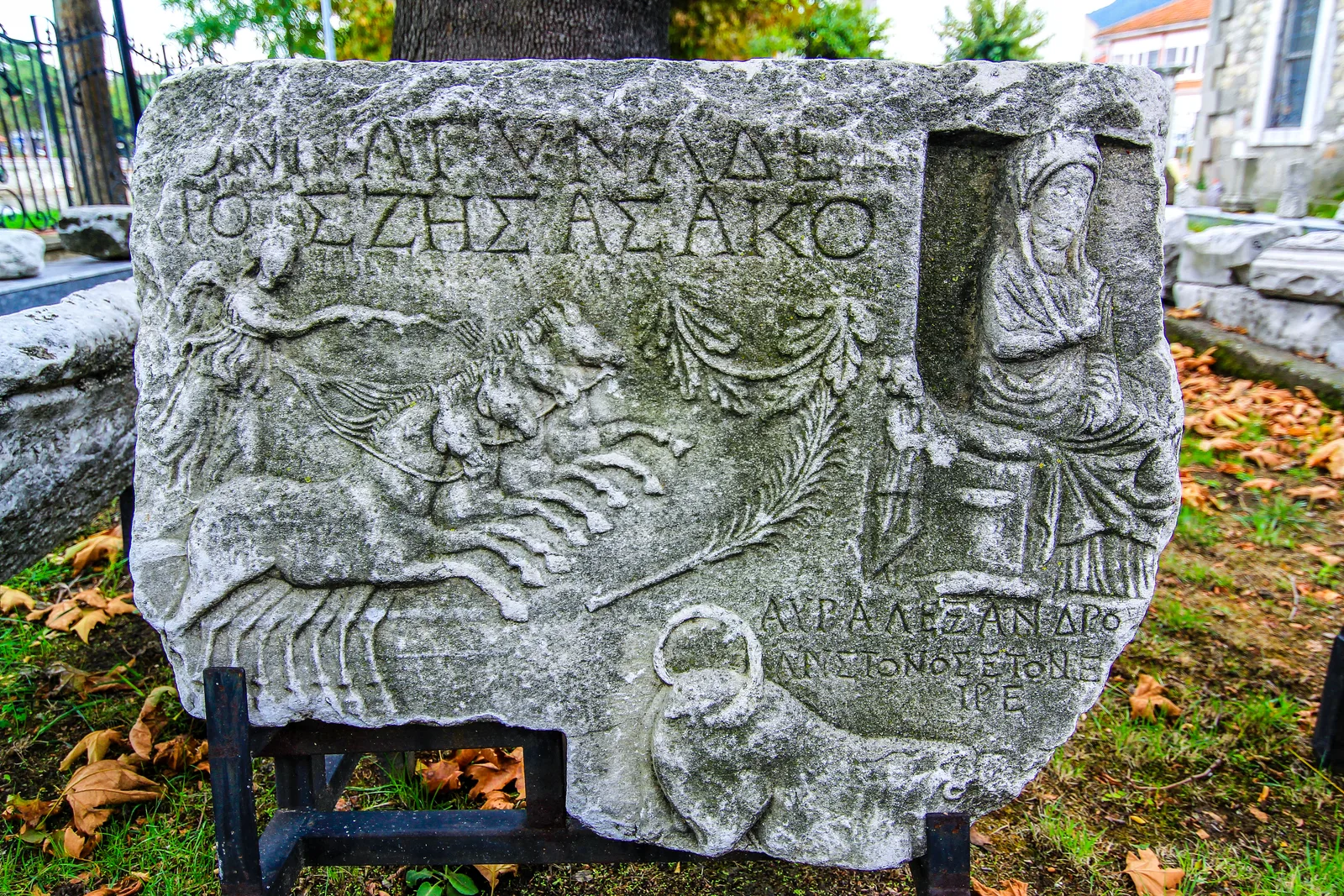
Story Retracing the Footsteps of the Past at Amasra Museum
A Hadrian torso, Roman amphorae, bronze coins and an ancient garden: Amasra Museum's stone building on the Small Harbour shore preserves thousands of years of the city's memory.
 Story
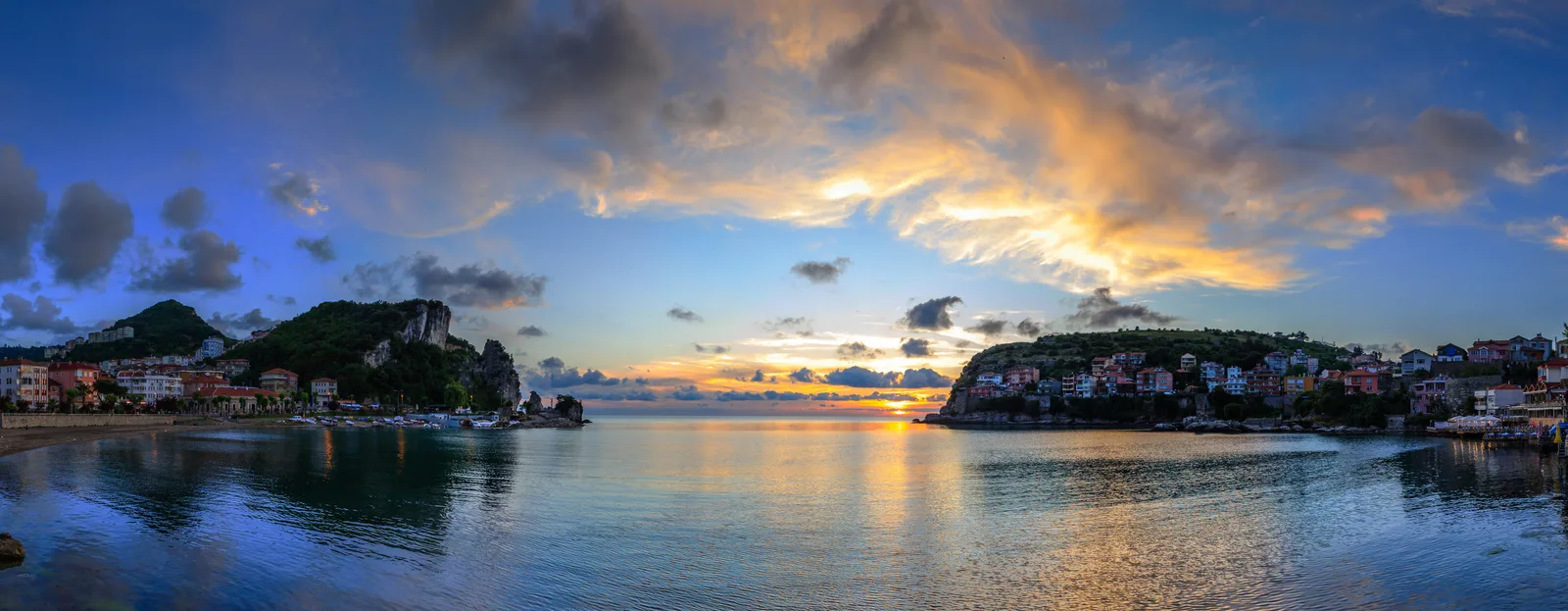
Story A Black Sea Tale in the Shadow of Clouds: Amasra
Sunlight filtering through storm clouds turns the Black Sea into a living painting.