
A Hero of Story, Not of History: Barut Hüseyin
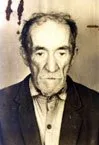
A hero of story, not of history. In 1912, among the raw recruits sent to dig in and lie in trenches at the passes of the great Balkans, there was also Hüseyin of the Amasra Baruts. That war ended; a greater one began. The First World War (1914–1918), fought on not one but many fronts, devoured not tens of thousands but hundreds of thousands.
A hero of story, not of history
In 1912, among the raw recruits sent to dig in and lie in trenches at the passes of the great Balkans, there was also Hüseyin of the Amasra Baruts. That war ended; a greater one began. The First World War (1914–1918), fought on not one but many fronts, devoured not tens of thousands but hundreds of thousands. Hüseyin weathered this ordeal as well — as a soldier with battle experience and, moreover, wounds that had healed. The old people of Amasra, when recounting their memories in the 1960s, would say: “Of the 93 Amasrans we sent off to the mobilisation, three came back alive — and one of them was Barut Hüseyin.” This quicksilver young man, two months after returning to Amasra in the spring of 1919, joined the volunteers enlisting for the Anatolian War; he was assigned to the local Coastal Surveillance Detachment. He was demobilised in 1922.
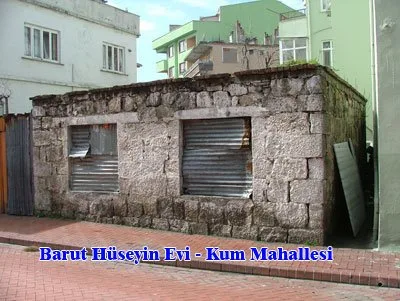
What could Amasra give its own people beyond its natural beauty?.. Fishing, half-starved farming, crewing on barges and sailing vessels. He tried those too, to make a living — stonecutting, shepherding. He married, had children. They say he was known by the name “the valiant one”; he carried the family nickname that later became the surname “Barut” as a sobriquet, and was remembered as “Barut Hüseyin” until he died.
While spending his life shepherding in the countryside around the town, in his old age the death of his son — who had been a diver and suffered a pressure injury — and the failure to secure him a “War of Independence veteran” pension were the blows of fate that fell upon him near the end of his life!
Forty-one years after his demobilisation, when I too was demobilised in 1963 and posted to Amasra as a history teacher, the thing I was thinking about was whether my salary would be less than what I had received as a lieutenant! Yet Barut Hüseyin, who had never received a single kuruş either during his military service or throughout his long life, had never had such a worry! How did I come to know this slight, grasshopper-like but limping, impoverished old man? When I took students to the basilica ruins, to the slopes of the Acropolis to teach history and show the ruins, I would see him there — cattle and calves around him, a staff in his hand, a cigarette on his lips. When he noticed us, he would immediately drive the animals away, crumple his cap in his hand as a sign of respect, and follow along behind.
One day, after giving the students a preparatory assignment, I went to him. How much can a suffering, old and unkempt face open up with a smile of satisfaction?.. Especially when there is also a doubt of “I wonder?” I never forgot his answer to my question:
“It is shameful for animals to be where a teacher gives lessons!” Old rubber shoes on his feet, trousers cut short at the legs, a jacket with drooping shoulders on his back, a collarless, patched shirt! Red eyelids, unshaven, standing at attention — straightening himself a little more with each question — he introduced himself: “They call me Barut Hüseyin,” and told me he grazed the butcher’s slaughter animals by the day for a loaf of bread and a packet of village tobacco.
Until his death in 1969, in order to make him and his wife feel — leaving aside his military service — that they deserved the attention and assistance owed to them simply as citizens, from the state and society, petitions accompanied by a letter of attestation from the neighbourhood headman were sent to the Ministry of National Defence, the General Staff, the Societies of Former Combatants, Fighting Veterans, and Disabled Veterans, and Bartın Naval Base Command (*) — with no significant result.
Hüseyin Barut was brought to meet Retired Chief Colonel Sadık Atak, President of the Fighting Veterans’ Society who came to Amasra, and Retired Colonel Mazlum Keyüsk, who had participated in the Balkan, First World, and Independence Wars, and other elderly veteran officers, and Kemal Samancıoğlu, the Bartın Mayor who had been commander of the Amasra Coastal Surveillance Detachment during the National Struggle. Those who knew the commanders he named came forward. They directed questions at him with amazement at the clarity of his memory, and confirmed the accuracy of his answers.
The passages in the petitions sent to the General Staff, the Ministry of National Defence, and the Veterans’ Societies that related to “historical matters” are as follows:
“My date of birth is 1307. In the Balkan War I fought alongside my brother. In the World War I was among the soldiers of the 78th Infantry Regiment. During the enemy’s assault on Anafartalar we fought with them and routed many of them in the shallows and the coastal waters. But during the heavy artillery fire the enemy’s ships opened, 1,800 soldiers were wounded and killed. I too was wounded in the kneecap. The doctor in the hospital had patted me on the back. Three months later, when I recovered and left the hospital, they sent me to Dobruca. My company commander at Anafartalar was Captain Hüseyin Efendi from Afyonkarahisar. I later learned that he was martyred in Galicia. In Dobruca, our 25th Corps commander was Mustafa Hilmi Pasha; the commander of the new 74th Regiment I joined was Colonel Ahmed Bey of the Bedirhanids, known by the nickname “the Kurd”; my 3rd Battalion commander was Major Naşit Bey; my company commander was Circassian Asım Efendi, who was a captain. Upon arriving in Dobruca they sent us to Pravalya. Just at that moment, on news brought by a cavalryman, they put us on standby. They distributed Bulgarian uniforms and helmets to us. We fixed bayonets and began to watch the Romanian soldiers advancing toward us. As they drew closer we deployed as a battalion in skirmishing line. When the Romanian soldiers saw us they wanted to retreat, saying “Und Osman Paşa! (These are Osman Paşa’s men)” but our cavalry surrounded them — it was a battle in which we took hundreds of prisoners. In this battle we, who were in the first skirmishing line, fired the first shots. After we later fortified at Toprakhisar the enemy broke us. Our regimental commander ordered us not to retreat and to fall back to the second line. Once more we charged the enemy and broke them again. Afterwards we dug trenches south of Kalaş and I remained in the trench, under snow and ice, for a full two years. When the armistice came we went to Constanța. From there we were sent to Batum. Since I had also been wounded in the ankle at Toprakhisar, they assigned me to the artillery. I spent two more years on the Caucasus front. My company commander there was Captain Nuri Bey. We had joined the 8th Regiment as supplementary artillery. Our corps commander was also Kâzım Karabekir Pasha. I was demobilised and boarded boats working the shores together with others who had been demobilised, and sailed to Sinop, and from there to my homeland, Amasra. The prominent people of Amasra welcomed me with drums and zurna. Though I was very pleased by this, when I opened the door of my home I found no one there. During the long years of war, in the destitution of those times, both my mother and my father had died of illness. Before long, when the National Forces were established, I immediately went to the National Forces Office and enlisted as a volunteer. Since I was left with a disability from the wound I had received at Çanakkale, they did not send me to the front but assigned me as an artillery soldier to the Amasra Coastal Surveillance Detachment. (**) I never left the gun for two years. Then they told me I was demobilised.* For the homeland, for the sake of protecting Turkish honour, I endured every sacrifice. I stayed in snowy trenches, I paid no heed to my wounds. When the homeland was saved, I took up shepherding. For a while I worked as a stonemason. I could not continue that work for long. For 45 years I have been shepherding to provide for myself. My family are bedridden, there is no one to look after us. If I do not go out shepherding for a single day, we are reduced to dry bread. There must be survivors among our commanders in the Veterans’ Society. I cannot read or write. My discharge papers and the other papers given by the commanders were lost. I did not know that they would one day be needed. At Gallipoli, our German commander Golç Pasha was apparently going to give me a medal; for I was among the soldiers whose names were read out and separated by his aide-de-camp. He came to us and said something. The aide also said to us — “Bravo, he will give you a reward!” The next day I was wounded and they laid me in the hospital. When I was discharged they assigned me to the 74th Regiment, and nothing came of it.
*“*My eyes have stopped seeing these last two months as well. I have no strength left. My son was a diver and died from a pressure injury. I am eighty years old. What can I do in this state? Years ago there were those who said I would receive a medal, but due to the impossibilities and ignorance of those days I could not follow it up.”
*** His civil registry record as a citizen of the Turkish Republic reads as follows: “Surname Barut, Given Name Hüseyin, Father’s Name Mehmet, Mother’s Name Hatice, Province Zonguldak, District Bartın, Subdistrict Amasra, Quarter Kum, Date of Birth 1307, Religion and Denomination Turkish Muslim, Date of Death 30 November 1969”
Barut Hüseyin and his wife Sakine Kadın lived and lay in their stone house on floor bedding until 1969 — one bedridden, the other with eyes shut by cataracts. The two cash assistance payments of 200 and 250 lira sent by the General Staff and the Ministry of National Defence, the military rations delivered daily by Amasra Naval Command’s military police through the window in a mess tin, and their neighbours’ help had, even in that state, still made them happy.
The agile, spirited soldier of the Çanakkale battles, when recounting his experiences, would forget everything and lose himself; he would leap out of the trench, take aim, pull back, charge, crouch; grow angry, grow cheerful, pull up his trouser leg to show his wound scars; he would act out theatrical scenes. His sincere, frantically flustered manner reminded me of “The Turk of the Commune” in Alphonse Daudet’s Monday Tales — in his movements, his features, his physique. (****) Hüseyin Barut, like thousands of his contemporaries, had braved the hardships and the misery of life from the 1890s to 1969; he was a Mobilisation hero. If only stories like Daudet’s “The Turk of the Commune” or “The Standard-Bearer” could have come down to us from those people! The “prominent figures” hold the first lines of history. The death of a mule shot in the forehead while carrying ammunition to a battlefield is a subject for a story, not for history. Even if ordinary people conceal heroism in their lives, their situation is the same. Of the millions mown down by the scythe of what was called mobilisation on the fronts, or by the scythes of epidemic, hunger, and cold — how many can we know? Their numbers were noted; the scale, the significance, the totals of the dead were what was attempted in the telling. The individual stories were not.
Necdet SAKAOĞLU
“A Hero of Story, Not of History”
WHO IS YOUR HERO?
NTV Yayınları 18 October 2007 ISBN: 978-975-6690-86-4
Footnotes (*) Hüseyin BARUT (1891–1969)
- a) The content of the letter of attestation dated 15 May 1967, bearing the signatures and seal of Kum Quarter Headman Mahmut İyidoğan and members, is as follows: “Hüseyin Barut, son of Mehmet, born 1307, residing at No. 4 Eyiceoğlu Street, Kum Quarter, currently lives in extreme poverty together with his wife Sakine Barut, born 1307. Both husband and wife, who are sick and elderly, have no income from any source, nor do they have any relatives to assist them. Their son Mehmet Barut passed away one month ago as a result of a sea accident. Furthermore, the said Hüseyin Barut participated in all wars from the Balkan War onwards and was wounded in various places. It has been established by us that he has to date received no assistance from any institution or office for these services. This letter of attestation is hereby drawn up and signed by us and delivered to Hüseyin Barut, who grazes a butcher’s slaughter animals for 100 kuruş a day, both he and his family being sick, at his own request.”
- b) The reply to the petition of 8 May 1967 addressed to the Republic of Turkey Ministry of National Defence, signed by Brigadier General Bedrettin Demirel, Head of Personnel Department, dated 16 May 1967, was sent to the Bartın Military Recruitment Office and, for information, to Hüseyin Barut. Its content is as follows: “Hüseyin Barut, at the address written below, states that he rendered distinguished service during the First World War and requests moral assistance. I request that the situation be examined and an urgent report submitted as to whether he is deserving of assistance.”
- c) The reply to the petition of 15 May 1967 addressed to the Republic of Turkey General Staff, signed by Staff Colonel Dündar Türay, Acting Head of General Staff Personnel Department, dated 26 July 1967, reads: “Hüseyin Barut, Kum Quarter, Eyiceoğlu Street No. 4, Amasra, Bartın: In response to your application citing your difficult circumstances, as a result of the possibilities explored, the sum of (200) Lira as a one-time payment from the Armed Forces Moral Assistance Fund has been sent to your address through the T.C. Ziraat Bankası Ankara–Yenişehir Branch. Please confirm receipt of the money.”
- d) The common text of the letters dated 15 May 1967, sent to the central headquarters in Ankara of the Former Combatants’ Society, the Fighting Veterans’ Society, and the Disabled Veterans’ Society by Hüseyin Barut and separately by History Teacher Necdet Sakaoğlu, is as follows: “Dear President, For us of the new generation, to see the unnamed heroes of the most recent wars we read about as history in wretched condition in various corners of the country is, I assure you, deeply distressing and painful. The person who sent the attached petition is one of these, and perhaps the one in the most difficult circumstances. I have been serving as a history teacher in Amasra for four years. I am not a local; I have no distant or close connection with the person in question. I confirm as a teacher the truth of Hüseyin Ağa’s statement. All the townspeople, and in particular those of his own generation, have always introduced him to me in the same way, praising and recounting the sacrifices of his youth. According to the civil registry, Hüseyin Ağa is now 76 years old and is in an extremely wretched state. The help of well-wishers, far from pleasing him, is demoralising him spiritually. For he does not want to be reduced to receiving charity. Perhaps he wishes, in this most helpless period of his life, to attain some recognition for the sacrifices of half a century ago. Trusting that your Society will show the necessary support, I offer my respects and wish your members, our cherished elders, health and good days.”
To these letters only the Turkish Fighting Veterans’ Society replied, with the following response signed on 6 June 1967 by President General Sadık Atak and Vice-President Suphi Özden: “Dear Necdet Sakaoğlu, History Teacher, Amasra–Bartın: Your letter dated 15.5.1967 and its enclosures have been examined. The founding purpose of our Society is to gather within it the holders of the Independence Medal and to assist its impoverished members. Although the esteemed Hüseyin Barut states in his letter that he fought on many fronts, since he is not the holder of the Independence Medal, we regret to inform you that it is unfortunately not possible for our Society to provide him with any assistance, and we ask that this be explained to him.”
(**) The letter of 19 November 1968 from Bartın Naval Base Commander Gv. Colonel İsmail Göksu, who personally witnessed the seriousness of Hüseyin Barut’s health condition, addressed to the Chief Physician of Zonguldak State Hospital, Surgeon Dr. Hüseyin Erçin: “Dear Chief Physician: There is an elderly, destitute veteran in Amasra who is looked after by the welfare association our wives have set up. Hüseyin Barut. He may regain his sight through an operation. We had applied to your valued attention through the principal of Amasra Secondary School, the esteemed Necdet Sakaoğlu. You had said, ‘Let us see, we will do what is possible.’ We are sending the patient with one of our privates. If you could keep us informed about his condition, both through our private Ertan and — if he is admitted — by telephone, the necessary procedures will be carried out on our part. With thanks on behalf of the welfare association. With my best wishes and regards.”
(***) From the late Kemal Samancıoğlu, I had heard that as Amasra Coastal Surveillance Detachment Commander, volunteer enlistment had begun on 19 July 1919, but that due to the large number of applicants enlistment had been suspended until weapons and funds could be found. See Necdet Sakaoğlu, Çeşm-i Cihan Amasra, Turkish Economic and Social History Foundation, Istanbul, 1999, pp. 122–123.
(****) Alphonse Daudet, Monday Tales (Contes du Lundi) (from the World Literature in Translation series: trans. Sabri Esat Siyavuşgil) Istanbul 1962, National Education Press, pp. 155–160.
Where to stay and eat in Amasra
 Story
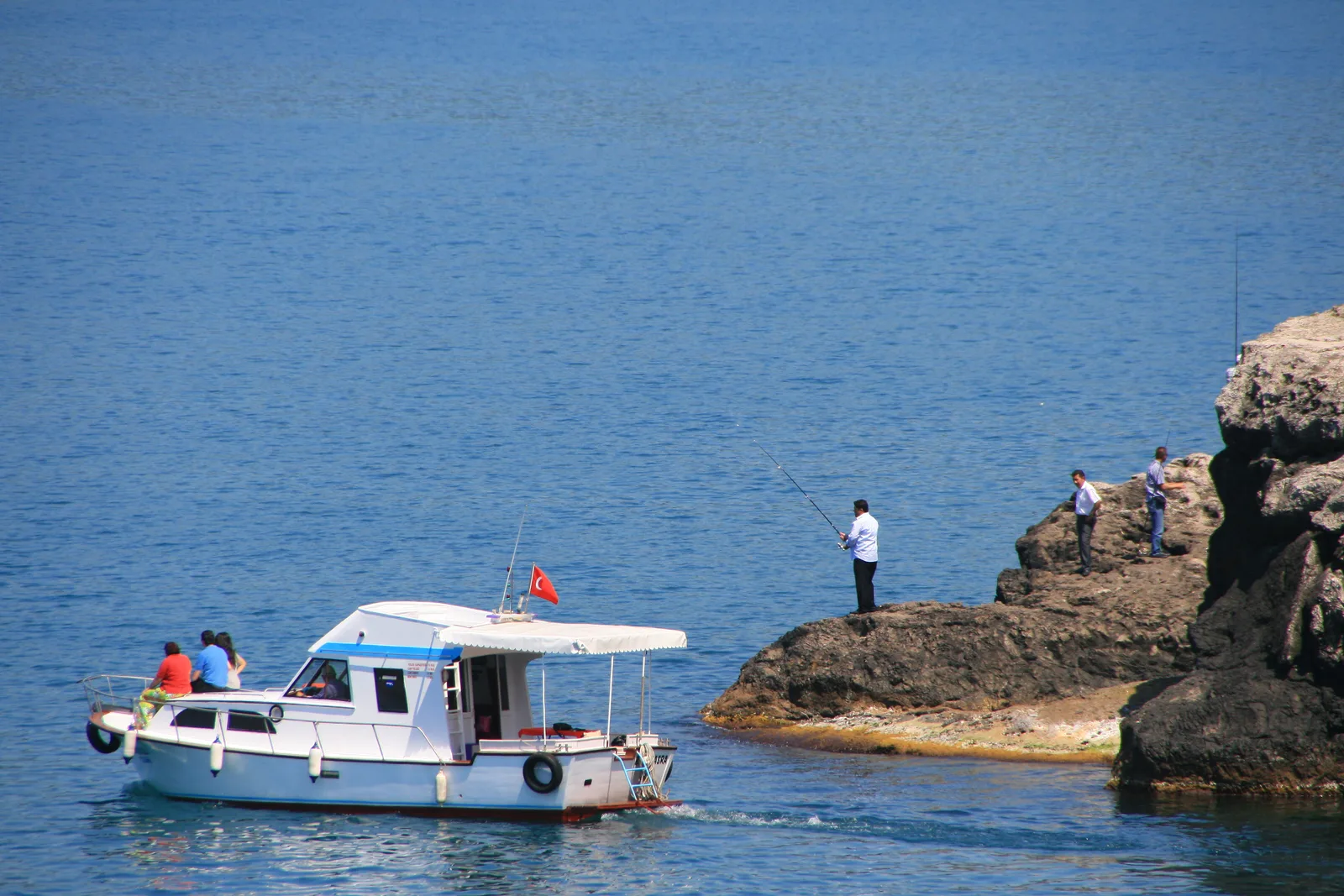
Story Rod Fishing in Amasra and the Flavor Culture from Sea to Table
Rod fishing on Amasra's pier, seasonal Black Sea catches, and how fresh fish travels from the water straight to the table in this cherished coastal town.
 Story
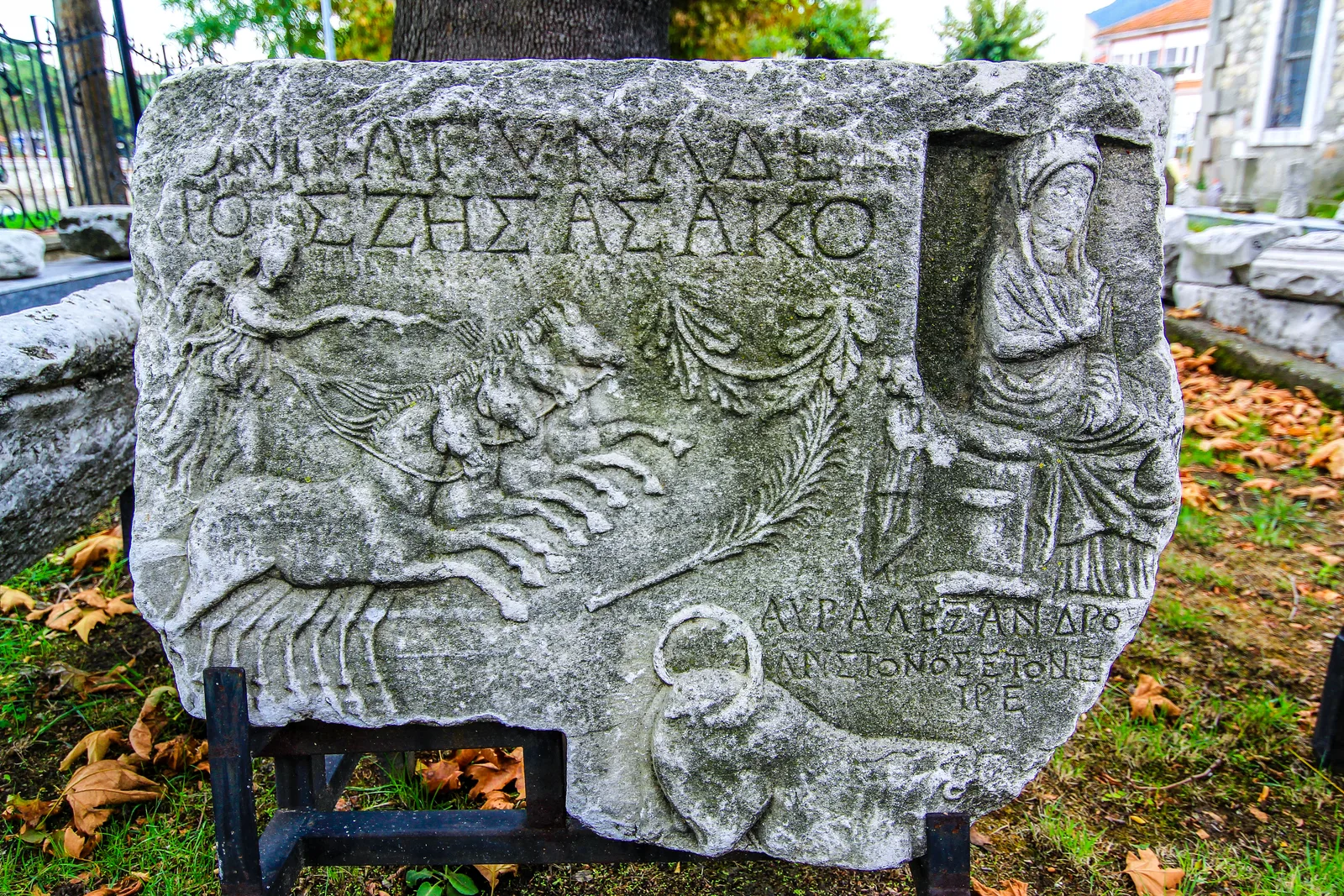
Story Retracing the Footsteps of the Past at Amasra Museum
A Hadrian torso, Roman amphorae, bronze coins and an ancient garden: Amasra Museum's stone building on the Small Harbour shore preserves thousands of years of the city's memory.
 Story
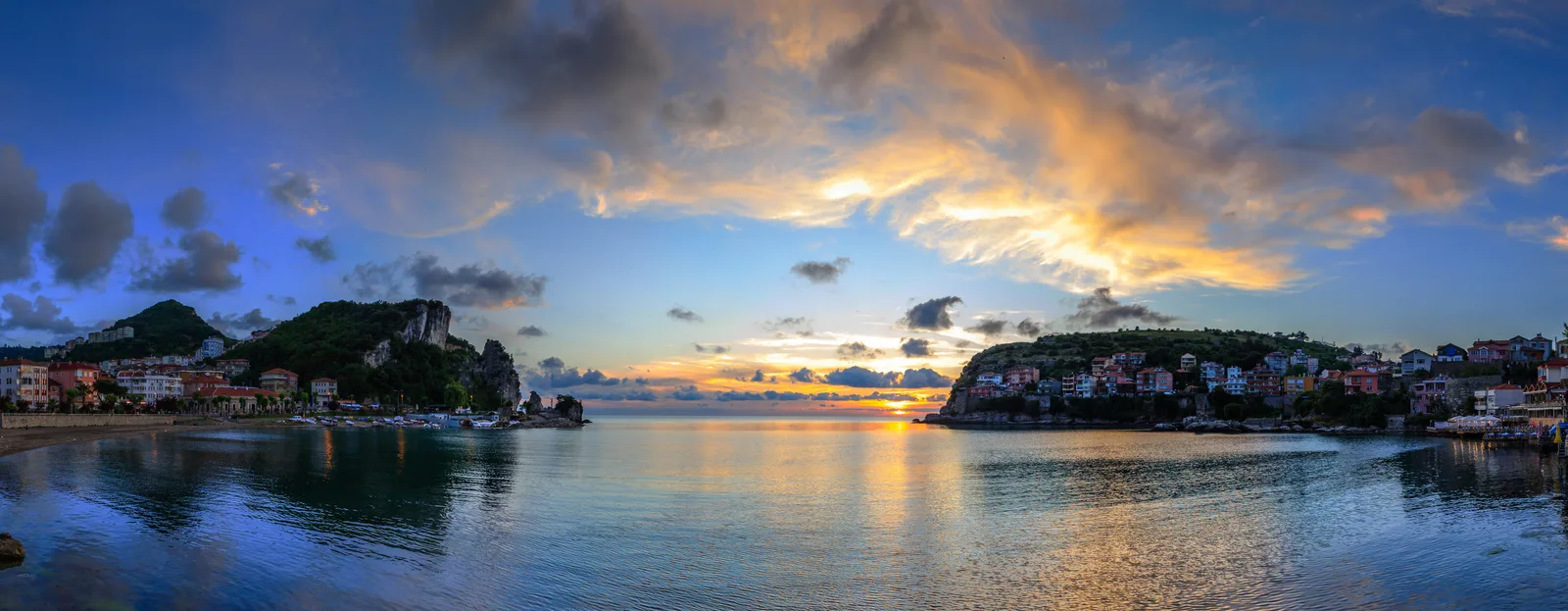
Story A Black Sea Tale in the Shadow of Clouds: Amasra
Sunlight filtering through storm clouds turns the Black Sea into a living painting.