
A Conversation with Necdet Sakaoğlu on the First World War in Amasra
In our recent history, within the last 150 years, there have been three great mobilizations. The worst of them — the First World War — has still not been fully written. A conversation with historian Necdet Sakaoğlu about what the wars did to people, families, and communities in Anatolia.
From Whom and Since When Did You Hear About the Mobilizations That Exhausted Anatolia’s Human Resources?
Today, what does the word “mobilization” mean?
Actually, the word needs to be preceded by another term: jihad. It was a jihad mobilization — a total war, a call for the entire nation to unite because there was a great enemy before us, even an “enemy of religion,” “states hostile to religion.” A jihad was declared against them. The people, with everything they had — young and old, women and men — were expected either to go to war or to devote all their means to supporting it. Seferberlik (mobilization) is a semi-Arabic, semi-Persian word meaning to give everything one has.
Now, in our recent history, or within the last 150 years, there have been three such mobilizations.
The first was the 1877–1878 Ottoman-Russian War, which the people called the “Great Mobilization.” Its common name is the 93 War, because it corresponds to the year 1293 in the Hijri calendar. The elders always referred to it as the “93 War,” the “Great Mobilization,” or the “Armenian Uprising.” That was because it marked the first major Armenian rebellions in Anatolia.
There is an interesting account about this. According to a foreign traveler — I believe Burnaby, an English officer who traveled through Anatolia in those years — “As the Russians approached Erzurum, the Armenians there would say, ‘Long live the Ottoman Sultanate, we are free under its flag; do not let the Russians take us, or we will be ruined.’ Yet when I came into central Anatolia and sat with Armenian villagers and townspeople there, they all said, ‘Let the Russians come and help us establish Armenia.’”
So the ideas of the eastern Armenian population and those living deeper in Anatolia were completely different and incompatible. The man who wrote this was Fred Burnaby. His book, On Horseback Through Asia Minor, was published twice in Turkish. That is why the people of Anatolia also called the ‘93 War the Armenian Uprising. That is how I heard it from the elders.
The second mobilization was the well-known 1914–1918 Great War. In oral history, some called it the Alaman Harbi (the German War), because the Germans were seen as the ones who started it. It was a movement against the colonial powers. The German nation, highly industrialized and especially advanced in military industry, was in a sense challenging the world. They brought the Italians with them. They also brought the Ottomans into the war. At that time we had pashas and commanders who admired Germany greatly, above all Enver Pasha. He admired them deeply. Perhaps he hoped to bring the same discipline and development to the Ottoman Empire. He was a young officer with good intentions.
People generally called this simply “the Mobilization.” They referred to the earlier war as the “Great Mobilization” and this one simply as “Mobilization.” This was the second mobilization. The term “First World War” only emerged later, after the Second World War.
Then there was the third mobilization, beginning in 1939 — the year I was born — and lasting until 1946, until the year I started primary school.
Most of the war memories I heard were related to the Second World War. I was a child then. We had a radio at home. Newspapers came from time to time. My elders, especially my father, would constantly discuss the war with neighbors in the marketplace. Shopkeepers who had no work gathered around, while others worked. There were many idle men wandering the bazaar as well. They would join in, directing the war, ending the war, emerging victorious in their imaginations — all fantasies, of course. Such conversations took place constantly.
My father’s and grandfather’s generation — that is, my parents’ fathers — were children of the ‘93 War. They were born around 1867. My father and mother, meanwhile, were children of the German War, or the First World War. So they knew these things firsthand. Both were literate people. Their education was roughly equivalent to a primary school combined with a junior high (rüştiye).
As I said, we listened to the radio, read newspapers. We knew a little. During the Second World War, I too was a child. So we can say that grandfather, father, and son — three generations — all became child witnesses to these three wars, without realizing it.
Unfortunately, while we have the saying, “Hear the news from a child,” we have no saying that says, “Hear war from a child.” What does a child know of war? Let me give an example. During the Second World War, I constantly heard the name Hitler on the radio. As a child, I thought “Hitler” was like the plural of lice — bitler in Turkish — something crowded and swarming. That is how a child’s mind works, and I never even felt the need to ask what it meant.
Among these three wars and periods, all three caused immeasurable destruction to the Turkish nation. And this destruction has never truly been written. Comparisons have not even been properly made. To me, the worst of them was the second mobilization — the First World War, or the German War. History has still not written the devastation it inflicted upon Türkiye, and it will be difficult to do so from now on.
Very few witnesses remain today, especially into this century…
There are none left from the first one. (The ‘93 War.)
Have you considered turning these memories into a book?
No. Perhaps we may someday write down the memories and what we heard, but war histories themselves have already been written extensively. In my opinion, what needs to be written now is not war history itself, but the destruction wars inflict upon countries and societies.
For this interview, for example, I looked at two sources. One was the article on the First World War in the Turkish Encyclopedia. It runs about twenty pages, with maps, sketches, and a few photographs. A substantial section. The author’s name is not given. In some entries of the Turkish Encyclopedia, authors are identified, but not in this case.
Clearly it was written from a military perspective. One can tell immediately. It speaks only of war: troop numbers, weapon types, military fronts, fortifications, campaigns — Kut, the Canal campaign, Gallipoli, the Caucasus front, and the seven fronts overall.
But there is not a single word about what happened behind the front lines. Nothing about villages, towns, families, shortages, famine, disease, or the destruction endured by ordinary people.
To me, the real story of the First World War — the message it should give the world — lies in what happened to the masses left behind in the cities, towns, and villages. Roads became unsafe. Great famine came with the war because whatever provisions could be found were diverted to the fronts. Hundreds of thousands of men were drafted.
Did you know the First World War involved thirty-three draft classes? In military terminology, each birth year constituted a “class.” Men born from 1860 all the way to those born in 1901 — thirty-three generations — were mobilized under arms.
The elders used to say that they saw grandfathers and grandsons together at the front. A man might have been drafted at thirty-five after marrying young, his son having also married young. Such things existed in Anatolia. Perhaps the older man volunteered, or was drafted late — I do not know — but they would say, “I saw a grandfather and grandson together,” or “I saw men whose beards had gone completely white standing in the same trench as boys barely old enough to shave.”
Of course, there is exaggeration and hearsay in such stories. Much depends on the storyteller’s sense of restraint.
What was happening in the towns and villages meanwhile?
That is what truly interests me.
While researching the history of Divriği, I found some written records from the Sivas region. But more importantly, I listened to people — serious people who spoke carefully and gave reliable information.
For example, I once listened to a retired lieutenant colonel who, during the war, had pursued brigands while holding the rank of lieutenant. He told me an anecdote I never forgot.
They had captured a gang of bandits controlling a mountain pass. In those days there were no handcuffs. They tied prisoners either to themselves or to each other by the feet. There were not even proper prisons. “We did not know where to detain them,” he said. “We would take them into groves, station gendarmes over them. They were starving anyway and too weak to escape.”
He said he once asked the gang leader:
“You rob roads, kill women, children, young and old alike for a few coins. The travelers carry almost nothing. Isn’t it sinful? Aren’t you afraid of God?”
The bandit pulled a piece of bread from his sash, threw it to the ground, and said:
“This is God, Lieutenant.”
Then he stepped on it.
“This is God.”
In other words, we worship bread. There is no bread. That is what we worship. Therefore, your concerns about fearing God mean nothing to us. We are starving.
City people at least had some food. Villagers had a few chickens, eggs, perhaps a cow. These bandits were army deserters. Once a soldier deserted, he became an outlaw. He had nowhere else to go. He could not return home — he would immediately be captured.
My father once told me of a horrifying scene. He was born in 1905, so during the war he was about twelve or thirteen, old enough to understand things and somewhat educated.
One day, word spread that two deserters would be executed behind the Grand Mosque. Out of curiosity, people gathered on the slopes nearby to watch.
A table had been placed behind the mosque. The mufti sat there, along with the judge and the major who headed the military branch in Divriği. There were attendants and gendarmes. We were too far away to hear clearly.
Apparently, the judge had asked the mufti for a fatwa, and the mufti declared that the punishment for desertion during wartime was death by firing squad. The judge issued the sentence, and the commander would carry it out.
Before the execution, the men had been given shovels and ordered to dig their own graves. They stood beside them waiting to be shot.
According to my father, after the first man was shot and fell into the grave, the mufti suddenly shouted:
“Stop!”
Then he rose and declared loudly so everyone could hear:
“His death has served as a sufficient lesson. Let us not waste another soldier. Send this man immediately to the front — to the heaviest fighting. Perhaps he will die a martyr there and atone for the sin of desertion while still in this world.”
And so the second man was spared.
My father said he knew both men personally. “They were our older brothers,” he used to say. “They were people from our own town.”
This was a scene from the Great War.
All these stories disappeared along with those who witnessed them. They were never written down. Countless such events vanished. History erases quickly. If you do not record things, they disappear forever.
The fears and emotions of soldiers and ordinary people perhaps…
I heard another story from my mother. She herself was a child then.
A neighbor’s son had deserted the front. Somehow, in the dead of winter, he had managed to walk all the way back from either Kut or the Caucasus front to Divriği.
Late at night, in the freezing cold, he cried out in the street:
“Mother!”
The woman opened the window.
“Who are you?” she asked.
“Mother, it’s me. Your son.”
“I have no son,” she replied. “My son is at war.”
Then she shut the window.
The man knocked again and called again. But the mother remained silent. Eventually he left. No one ever learned what became of him.
I knew that woman in her old age — a dignified lady with white hair.
One cannot simply say she was heartless. Had she taken him in, both of them would have been ruined. The boy would certainly have been caught and executed or sent back to the front. The mother herself would have been punished, perhaps confined in the imam’s house.
Do you know what an imam’s house was? Since there were no prisons for women, female detainees were kept under watch in the local imam’s home.
The woman could not take the risk.
Another woman I knew was, in a sense, one of the living remnants of the mobilization.
She had been a beautiful young woman around 1915. She fell in love with a neighbor’s son; eventually they married. But only three or four months later, her husband was drafted. He never returned. Two years later news came that he had died.
She would say:
“What was I to do? I was young, and they said I was beautiful.”
Sometimes she laughed while speaking, sometimes she cried. I have never seen another person tell stories laughing and crying at the same time.
People told her:
“You cannot stay alone in your house looking like this. Your reputation will be ruined. Men will pursue you. It is best you remarry.”
“I did not want to,” she said, “but I had no choice.”
They married her to a man old enough to be her father, a widower with children of his own.
Then one day her first husband returned.
He had not died after all.
By then she already had children from her second marriage.
“I could neither divorce nor leave,” she said. “The worst part was that my second husband’s house, my first husband’s house, and my parents’ house were all in the same neighborhood. I carried the shame of betraying that man for the rest of my life.”
Then she would begin to cry.
These are the true dramas of war.
We write endlessly about Enver Pasha, but why did we never write the stories of this woman, or of that soldier standing at his mother’s door?
Interview by Hüseyin Çoban

Where to stay and eat in Amasra
 Story
Story Rod Fishing in Amasra and the Flavor Culture from Sea to Table
Rod fishing on Amasra's pier, seasonal Black Sea catches, and how fresh fish travels from the water straight to the table in this cherished coastal town.
 Story
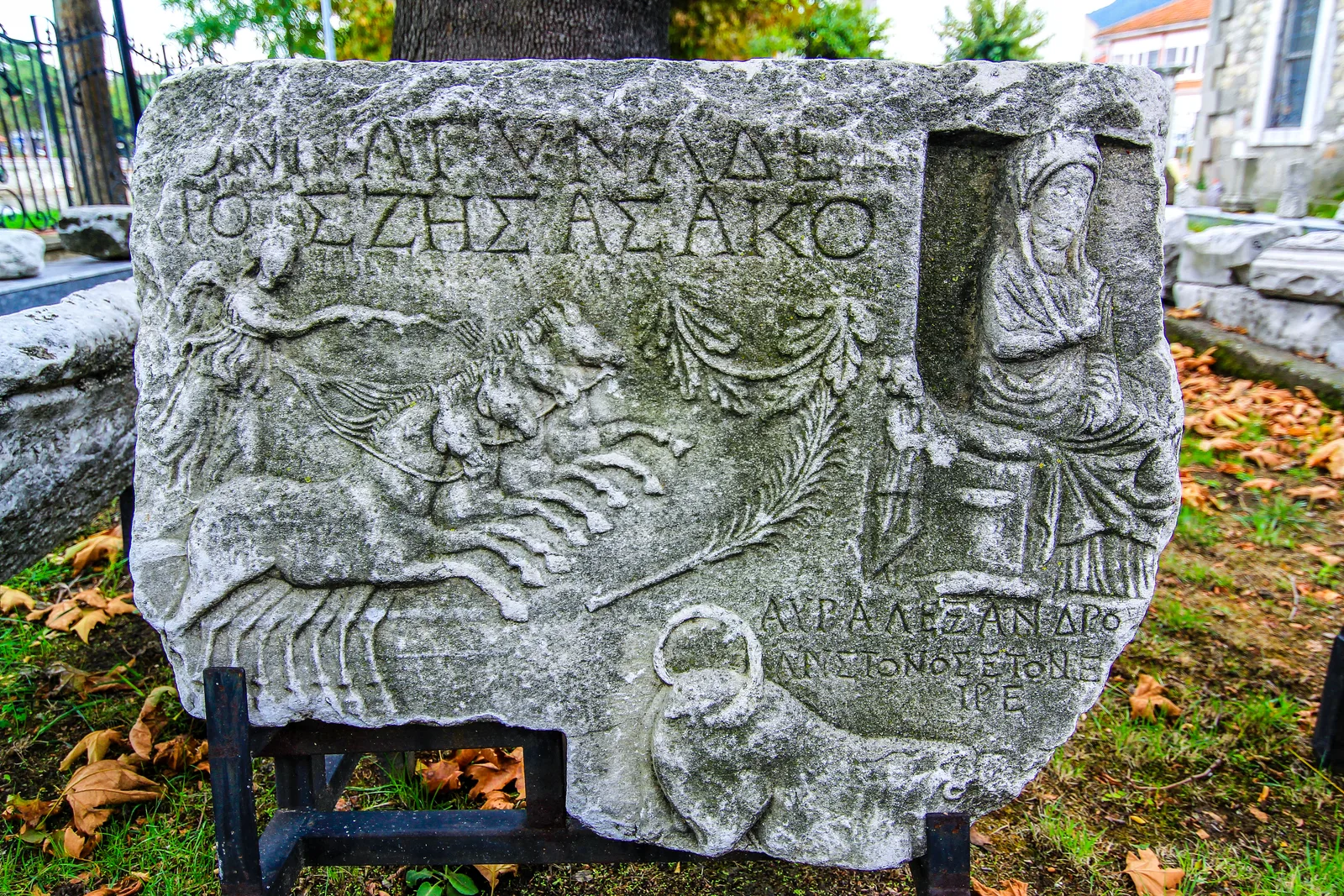
Story Retracing the Footsteps of the Past at Amasra Museum
A Hadrian torso, Roman amphorae, bronze coins and an ancient garden: Amasra Museum's stone building on the Small Harbour shore preserves thousands of years of the city's memory.
 Story
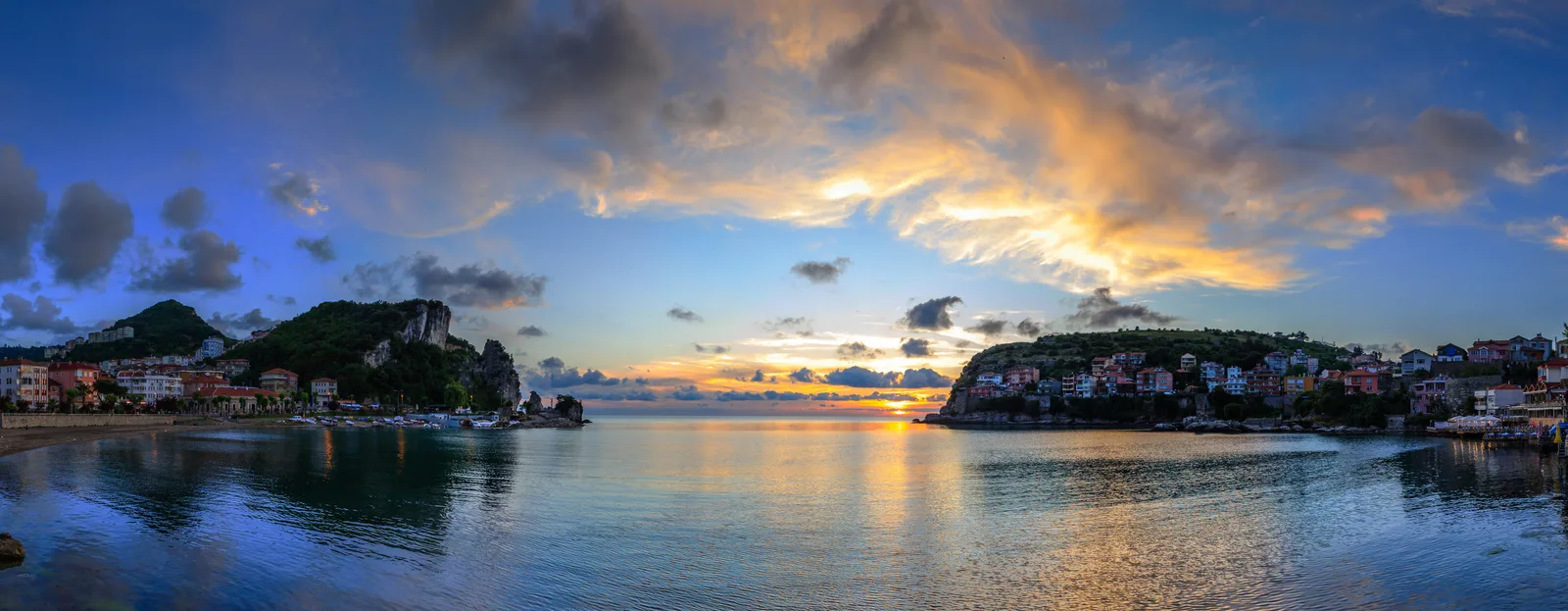
Story A Black Sea Tale in the Shadow of Clouds: Amasra
Sunlight filtering through storm clouds turns the Black Sea into a living painting.