
The '1st of May' Inscription in Amasra
Necdet Sakaoğlu investigates the French '1 May 1911' inscription carved into Amasra's breakwater — possibly the earliest stone-carved record of labour solidarity in Turkey.

THE FRENCH INSCRIPTION ON THE BREAKWATER STONE:
The ‘1 May’ Inscription in Amasra. Written by: NECDET SAKAOĞLU. During the 1911 harbour construction begun by the heirs of Sarkis Balyan in order to renew their coal and harbour concession, the upper stones of the towers and walls of Amasra’s castles were removed and used in the breakwater. The block stone on which the date 1 May 1911 was inscribed was also, in the course of this destruction, prised from the castle wall where it had been placed by Byzantine workers hundreds of years earlier, and set in its present position by workers employed by the heirs of Sarkis Bey — its new duty being to serve as a barrier against the waves of the Black Sea. The birth of 1 May, “International Workers’ Solidarity Day,” in the United States is known to be 1886. The beginning of workers’ organisation in our country dates to an even earlier period: the Amele-Perver Cemiyeti (Workers’ Benevolent Society), founded in 1871. This association was founded in the final years of the Ottoman Empire’s Second Constitutional Period to provide assistance to poor workers and tradespeople of modest means. Since workers at the time were called “amele,” the workers’ demonstrations repeated in 1909 in Skopje, and in subsequent years in Istanbul, Thessaloniki, and certain Rumelian cities, were called “Amele Bayramı” (Workers’ Festival). Ottoman socialists who gathered on 1 May 1912 had a photograph taken. The caption placed beneath this image, published in the second issue of the journal İştirak, reads: “The 1 May Festival conducted by Ottoman socialists in the Belvü Garden in Pangaltı, on the first day of May 1912 in the European (Gregorian) calendar.” One year before that, on 1 May 1911, in Amasra — where historical documents ranging from ancient inscriptions to Genoese coats of arms and Turkish gravestones can be seen — the inscription “1 May 1911” was carved onto one of the stones of the breakwater then being built. This inscription, the like of which we consider unlikely to exist anywhere else in Turkey, may be of interest to researchers of labour history and to those fascinated by documents carved into stone.
In the summer of 2005, while I was in Amasra, young people sensitive to local cultural values alerted me to this stone. I descended the rock steps of Küçükada, made my way down to the seaward side of the Large Harbour breakwater, and found it as if I had placed it there myself — this stone, on whose face the inscription “1911 Mai I” had been carved and inlaid. I photographed it with my own camera. Despite having been closely involved with Amasra’s history since 1963, I was astonished that I had never seen it before. That this two-line French inscription on the second stone connecting the breakwater to the natural base of Küçükada is not a casually written date is evident from the manner in which it was made. Using a stonemason’s chisel, deep grooves ten centimetres high and one and a half centimetres wide were cut into the seaward side face of the large block stone, filled with hard white mortar, and an inscription was thus created — indelible, resistant to abrasion, capable of defying time. It is beyond doubt that this French inscription was made by one of those working on the Amasra breakwater at the time — someone who knew of International Workers’ Solidarity Day on 1 May. It is known that the Amasra Large Harbour breakwater reached its present length of 650 metres through additions made at three separate times — in 1911, 1929, and 1957 — and that the first sixty-metre section was built in 1911–1912 by the heirs of Sarkis Bey Balyan (Istanbul 1831–1899), one of the palace architects of the Balyan family, using (!) among other materials the stones of Amasra’s castles. The Workers’ Day inscription in question must therefore be the work of one of the non-Muslim technical personnel sent by the heirs of Sarkis Bey to Amasra for this first construction project. For it is inconceivable that the local labourers employed in building the breakwater should have known French, or been sensitive to workers’ actions and workers’ celebrations.
To briefly recall the background of the matter: it is known that Sarkis Bey also obtained the right to open a coal mine in the Havza-i Fahmiye (Zonguldak Coal Basin), the boundaries of which were defined by the Dilâver Paşa Regulation (1869). In his work entitled The Balyan Family, Pars Tuğlacı states, on the basis of documents in the Ottoman Archive, that this celebrated palace architect founded the Şirket-i Nafia-i Osmani (Ottoman Public Works Company) in 1873 with a capital of one million Ottoman gold coins, obtaining a 35-year concession to operate coal mines in the districts of Bartın and Cide, attached to the Province of Kastamonu, on the condition that he build railways to certain locations; that after conducting on-site surveys he made an attempt to build a quay at a cost of forty thousand gold coins. Whether Sarkis Bey had any activity in the Coal Basin is a separate matter. However, it is documented that he did not take in hand the construction of a breakwater for Amasra Harbour or the laying of a narrow-gauge railway line between the harbour and the coal mine; and that when the 35-year concession expired in 1908, his heirs — since he himself was no longer alive — submitted a request for a new concession agreement. This letter from the Sublime Porte, dated 23 August 1913, when considered together with the 1 May 1911 inscription on the Amasra Large Harbour breakwater, makes it clear that the heirs of Sarkis Balyan embarked on harbour construction in 1911 in order to renew their coal and harbour concession, and submitted their application after building the first sixty-metre section of the breakwater. In the meantime, it was Amasra’s castles that paid the price: as elderly residents told us years ago, the upper stones of the towers and walls were removed and used in the breakwater. Without doubt, the block stone on which the date 1 May 1911 was inscribed was also, in the course of this destruction, prised from the castle wall where it had been placed by Byzantine workers hundreds of years earlier, and set in its present position by workers employed by the heirs of Sarkis Bey — its new duty being to serve as a barrier against the waves of the Black Sea.
That is the history of the stone!…
Written by: NECDET SAKAOĞLU
Where to stay and eat in Amasra
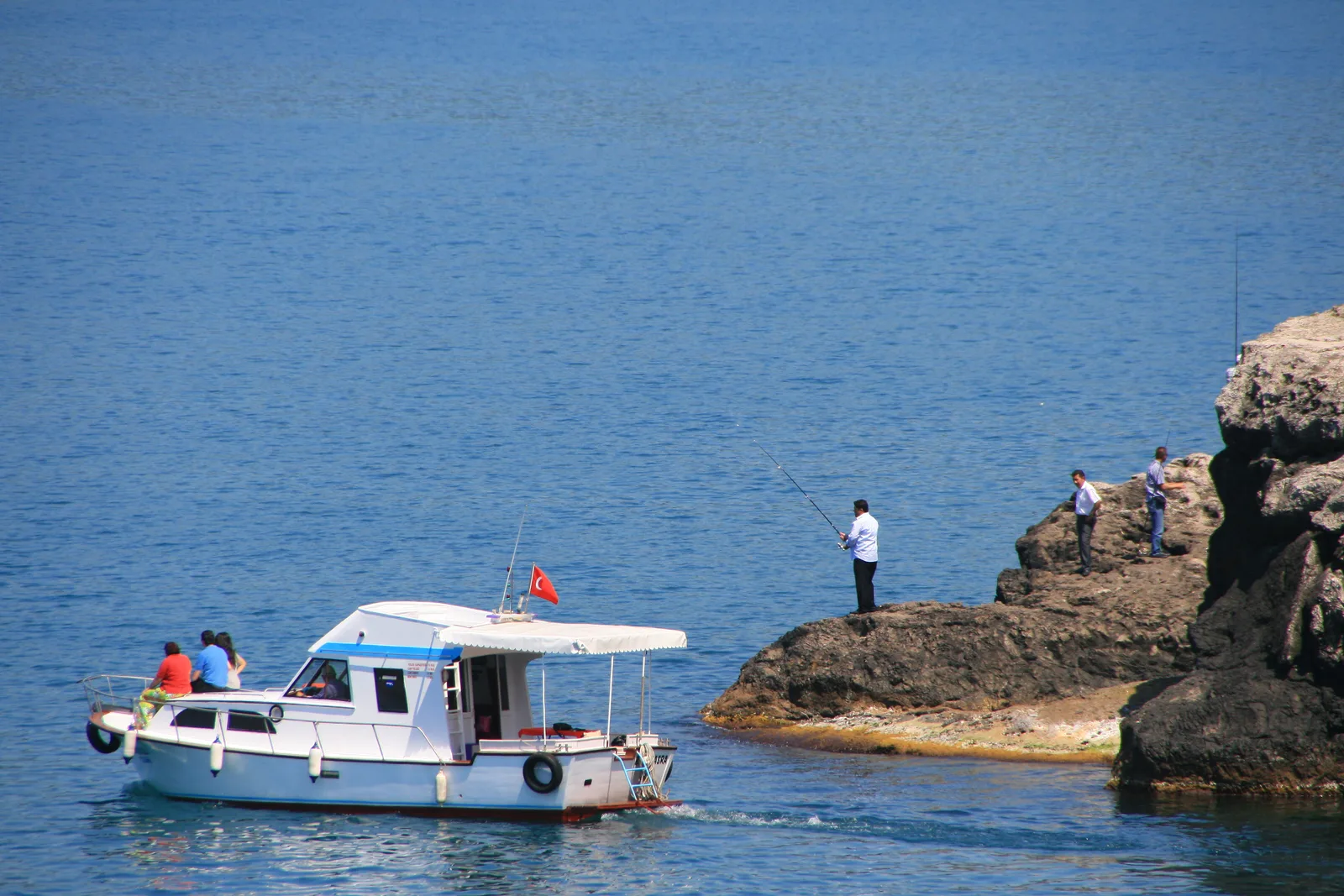 Story
Story Rod Fishing in Amasra and the Flavor Culture from Sea to Table
Rod fishing on Amasra's pier, seasonal Black Sea catches, and how fresh fish travels from the water straight to the table in this cherished coastal town.
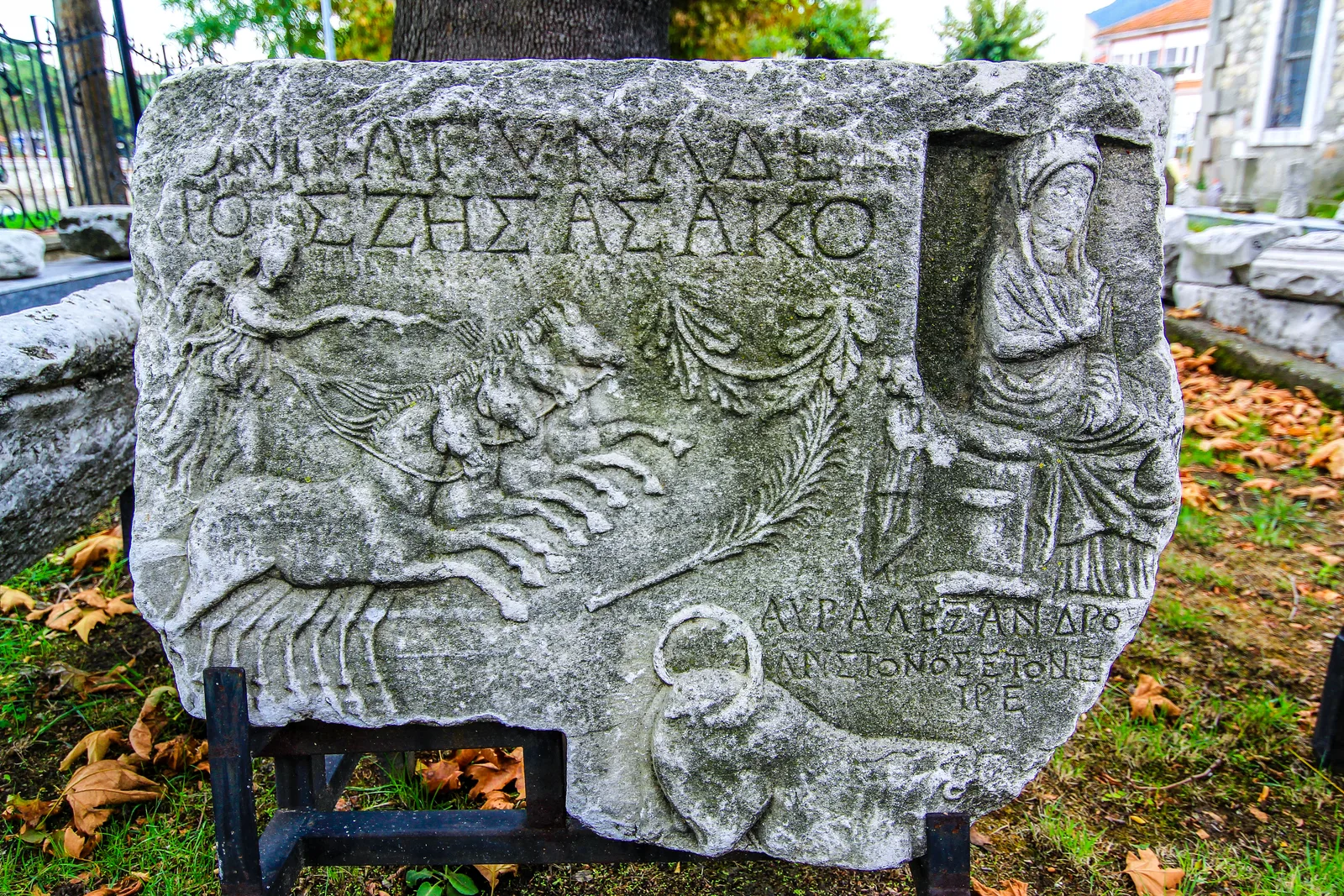 Story
Story Retracing the Footsteps of the Past at Amasra Museum
A Hadrian torso, Roman amphorae, bronze coins and an ancient garden: Amasra Museum's stone building on the Small Harbour shore preserves thousands of years of the city's memory.
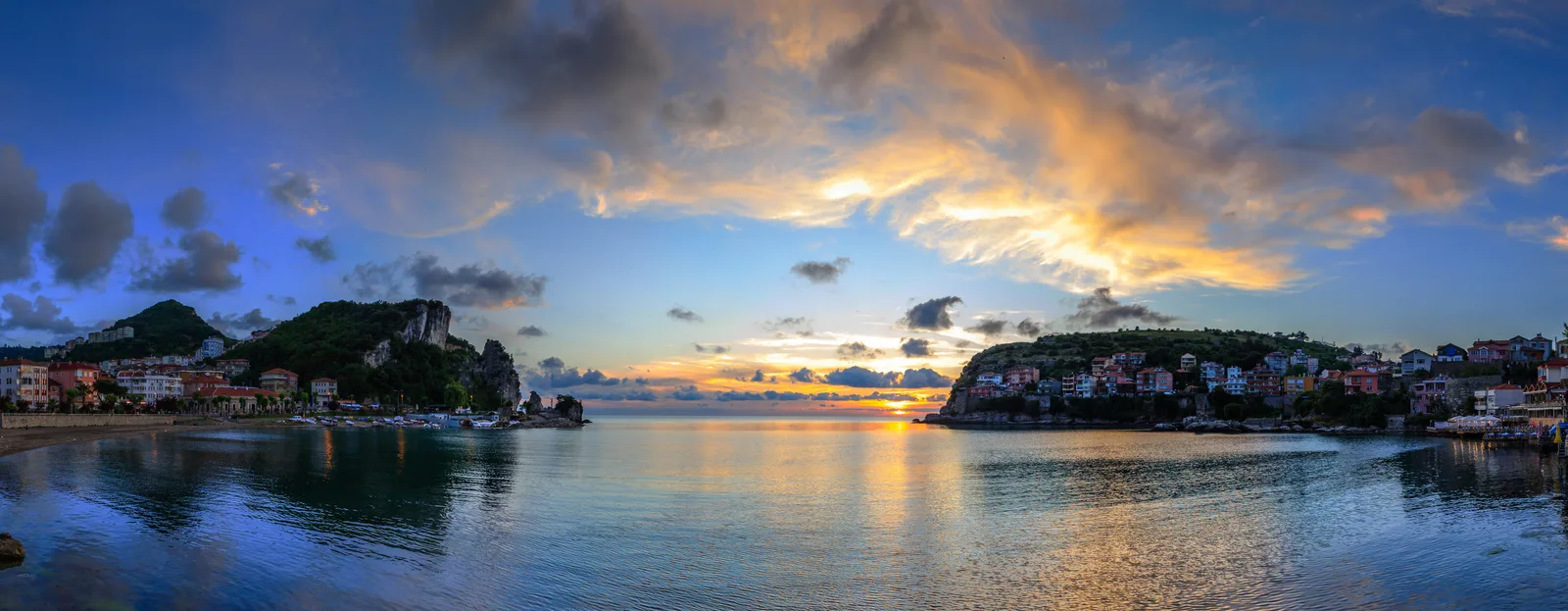 Story
Story A Black Sea Tale in the Shadow of Clouds: Amasra
Sunlight filtering through storm clouds turns the Black Sea into a living painting.