
A Journey from Saz Lake to the Lava Columns
The "Suyun Peşinde" group on the western side of Bartın. A small section of the group devoted to exploring Amasra and its surroundings sets out this time in search of a lake at Saz Village, where the Filyos River meets the sea.
The “Suyun Peşinde” group on the western side of Bartın.
A small section of the group devoted to exploring Amasra and its surroundings sets out this time in search of a lake at Saz Village, where the Filyos River meets the sea.
Heading west from the Amasra road, leaving Bartın behind, passing Kokaksu on the left, we reached the Filyos River. But finding this lake was not so straightforward. Without the short detours and local guides with their local directions — which often pointed us the wrong way — we would have struggled. Even so, our sweet-tongued guide’s parting words (spoken after the camera was off, so you couldn’t hear them): “SAPUTMAY” (“Don’t go astray”) — after which we promptly turned around and followed the road correctly.
According to our local guide, the lake formed after the 1998 floods that struck the western Black Sea. The floodwaters changed the course of the Filyos River; when its mouth was blocked by sand carried by the sea, a large lake formed. We strolled among fishermen casting lines in the reeds, cows grazing on the shore gathering milk, and villagers picnicking in the shade of red trees. We began the day by discovering Saz Lake on the shores of the Filyos River at Saz Village.
Further along our route on the western side of Bartın lie the beaches of Kızılkum, Mugada and Güzelcehisar. Güzelcehisar is 17 kilometres west of Bartın. It has a beach somewhat sheltered from the north wind.
Those watching the sunset from the horizon of the village — where the ruins of an old fortress can be found — will be surprised to see “rocks climbing the mountains”. On the western end of the village, at the foot of the beach, the Lava Columns rising from the sea reach heights of up to 50 metres. Also found in the Gökyar area on Amasra’s eastern shore, these rocks are the same 80-million-year-old Lava Columns upon which the Kuş Kayası Road Monument was built. The Güzelcehisar Lava Columns, listed in Turkey’s geological heritage inventory, are among the world’s rare and well-developed natural formations.

Where to stay and eat in Amasra
 Story
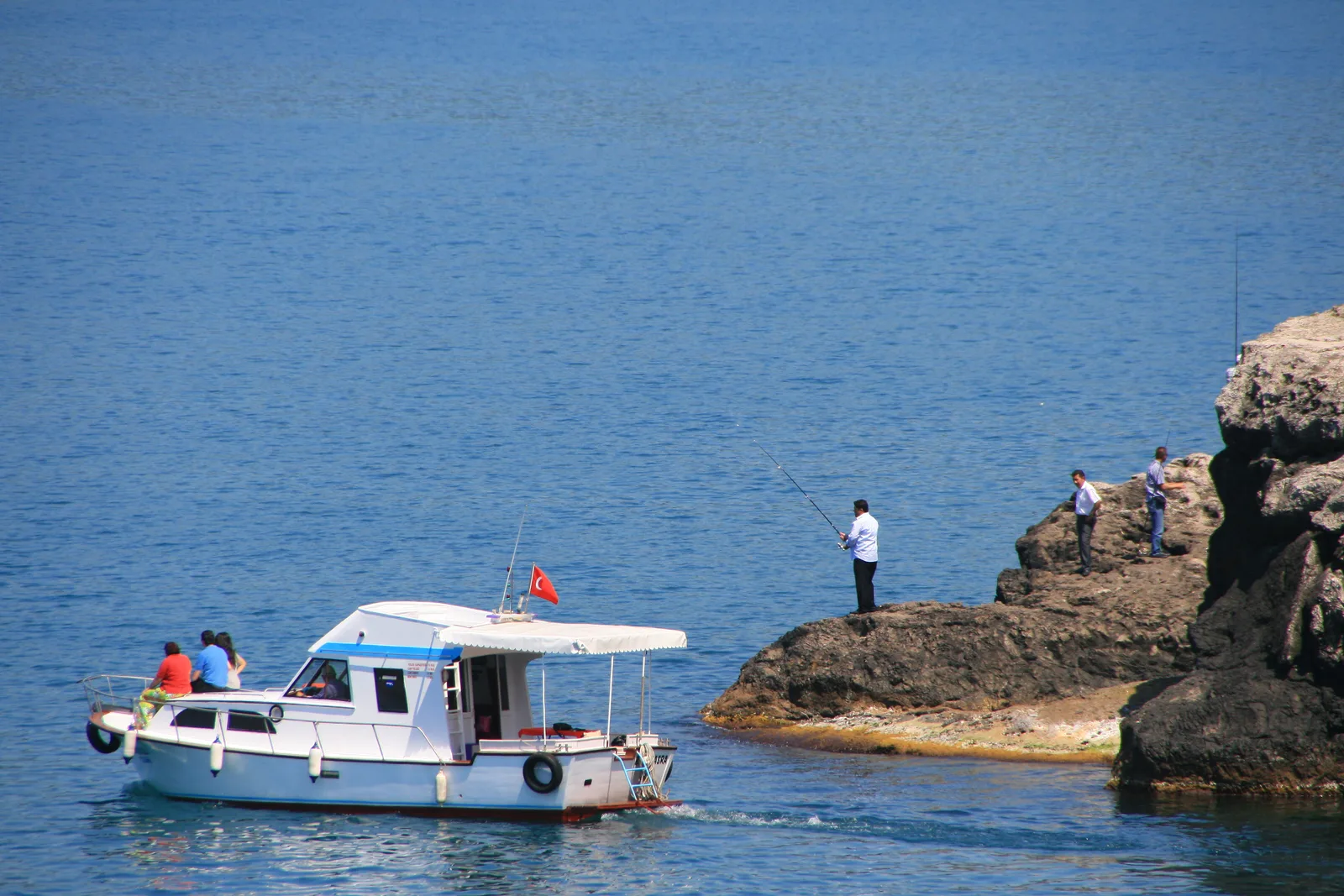
Story Rod Fishing in Amasra and the Flavor Culture from Sea to Table
Rod fishing on Amasra's pier, seasonal Black Sea catches, and how fresh fish travels from the water straight to the table in this cherished coastal town.
 Story
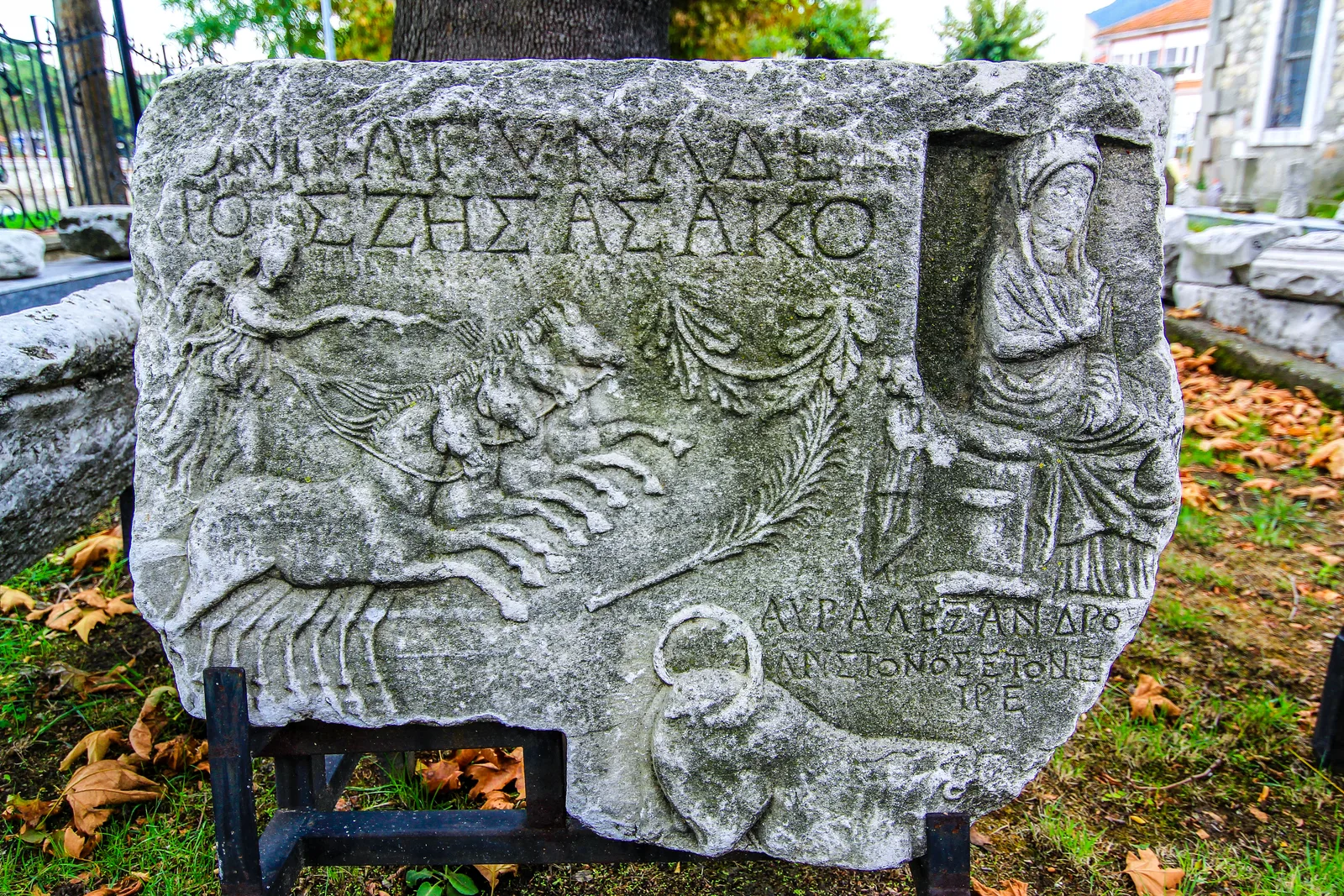
Story Retracing the Footsteps of the Past at Amasra Museum
A Hadrian torso, Roman amphorae, bronze coins and an ancient garden: Amasra Museum's stone building on the Small Harbour shore preserves thousands of years of the city's memory.
 Story
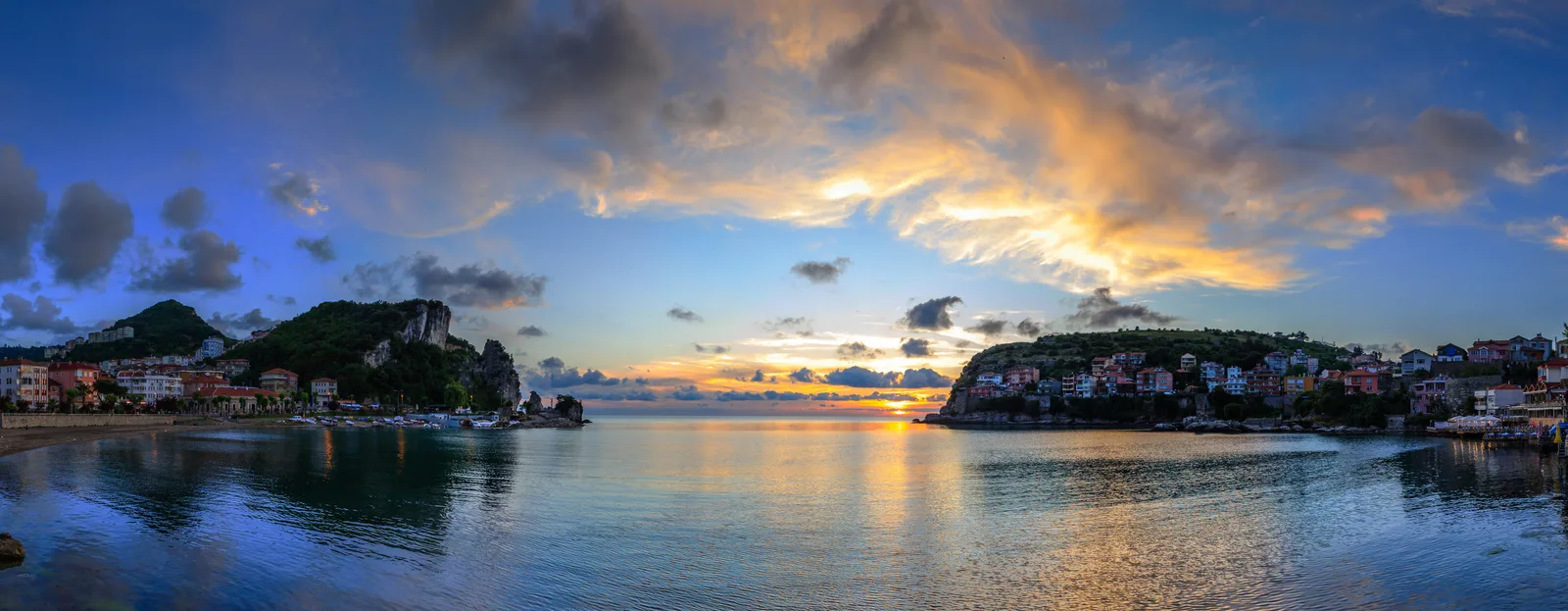
Story A Black Sea Tale in the Shadow of Clouds: Amasra
Sunlight filtering through storm clouds turns the Black Sea into a living painting.