
"I Won't Stay Here — Let's Make It a Museum!"
The use of the Amasra District Governor's residence and the old İptidai Mektebi (primary school) — one of Amasra's important buildings — can be reconsidered. The Amasra Urban Culture Research group (AKKA) had previously proposed using the building as an Amasra Cultural Centre. The story of a Kars governor who turned a 4,000-square-metre historic mansion into a museum.
The use of the Amasra District Governor’s residence and the old İptidai Mektebi (primary school) — one of Amasra’s important buildings — can be reconsidered.
The Amasra Urban Culture Research (AKKA) group had previously proposed that the building be used as an Amasra Cultural Centre when it was being restored as the district governor’s residence. Buildings like this, which reflect the identity of the city, can be put to new uses — as in the news example below. An Amasra Cultural Centre to be used in cultural and artistic activities and civil society activities can be brought back onto the agenda through this occasion. We invite the Amasra District Governorship, the Amasra Municipality and Amasra’s civil society organisations to take this important step.
His name is Mehmet Ufuk Erden. Governor of Kars. He and his wife are touring a historic governor’s mansion of 4,000 square metres. Three entrance halls, four magnificent reception rooms, six bedrooms, four bathrooms, a larder, a garden… He and his wife Yeşim exchange a glance. Then a letter to the Ministry of Culture: “For the conversion of the historic mansion into a museum…”
He had been a primary school teacher in Aydın. He wanted to study law. He sat the exam and passed. He graduated from the Faculty of Law. Then he passed the district governor exam. Then he became Chief Inspector of Interior Affairs. And six months ago he was posted to Kars as governor… Now he is the governor of Kars.
HE BROUGHT HIS FAMILY Governor Mehmet Ufuk Erden took his wife and two children and went to Kars. They enquired about the official residence. They were shown a magnificent mansion spread across 4,000 square metres. Yeşim toured the mansion. She toured the three entrance halls, the four magnificent reception rooms, the six bedrooms, the four bathrooms, the larder and the garden… Then she turned to her husband… They looked at each other for a moment… The next day Governor Ufuk Erden wrote a letter to the Ministry of Culture. He requested that the Governor’s Mansion be turned into a museum. The Erden family moved into the top floor of a five-storey public administration residence across from the Police Directorate. Governor Erden is, I think, the first governor to have brought his children to Kars. I hope that those children studying in Kars will win places at Turkey’s best universities. SON OF THE HOMELAND And most importantly, may they grow up to be genuine “children of the homeland,” just like their mother and father. Not forgetting: Governor Erden, as Chief Inspector of Interior Affairs, was the inspector who investigated the infamous “Susurluk incident” and brought the truth to light.
HE MOVED HERE Governor Mehmet Ufuk Erden, who was posted to Kars by decree in January while serving as Chief Inspector of Interior Affairs, chose to move into a three-room public administration residence belonging to the Special Provincial Administration Directorate rather than into the mansion. The top floor of the five-storey residence on Faikbey Street, opposite the Police Directorate and belonging to the Special Provincial Administration Directorate, was prepared for the four-member Erden family — with daughter Tuğçe in her first year of high school and son Necdet in his second year. In the 140-square-metre flat without even a lift, since there is no permanent staff, all cooking and housework is done by the governor’s wife, Yeşim Erden, who is a teacher.
THE PEÇLER ARE HEATING Excluding personnel costs, the mansion vacated by Governor Erden will yield an annual saving of 60,000 YTL in fuel, electricity and water costs alone. The Governor’s Mansion — built by the Russians in 1897 in Baltic architectural style, covering a total area of four thousand square metres with one thousand square metres of enclosed space — is heated by peçler (tiled stoves), one of the features characteristic of Baltic architecture.
IT SHOULD FIT ITS HISTORIC MISSION Governor Mehmet Ufuk Erden, providing information about the conversion of the mansion into a museum, said the following:
“The mansion, built in Baltic architectural style, was constructed in 1897. Between 1877 and 1878 Kars and the surrounding region fell under Russian occupation. The occupation lasted approximately 40 years. The mansion was used as governors’ residence for many years. It served for nearly a century. One of its most important features is that it is a solid, thick-walled, single-storey structure. It is a beautiful space. I wish to give this historic space to Kars and to Turkish tourism. For this reason I left this mansion shortly after arriving in Kars four months ago. After it is restored in accordance with its historic mission, it will be used as a museum or as a venue for social activities.”
THE FIRST AGREEMENT After the Battle of Sakarya, the Treaty of Kars — signed on 13 October 1921 between the three Soviet Republics of Azerbaijan, Georgia and Armenia and the Grand National Assembly of Turkey, with Soviet Russia’s mediation — was signed in this historic mansion. With the Treaty of Kars, Turkey’s eastern border was finalised.
Where to stay and eat in Amasra
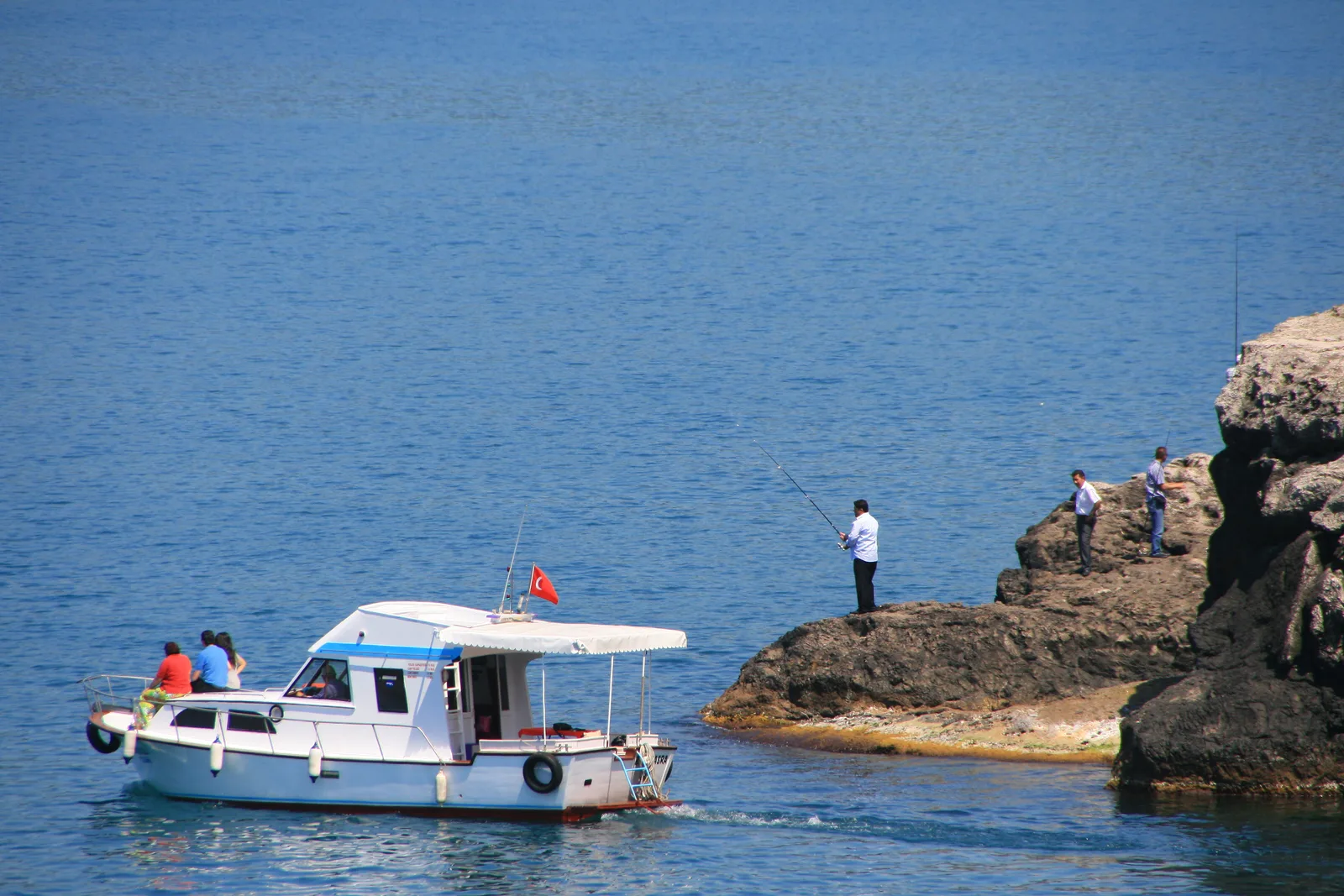 Story
Story Rod Fishing in Amasra and the Flavor Culture from Sea to Table
Rod fishing on Amasra's pier, seasonal Black Sea catches, and how fresh fish travels from the water straight to the table in this cherished coastal town.
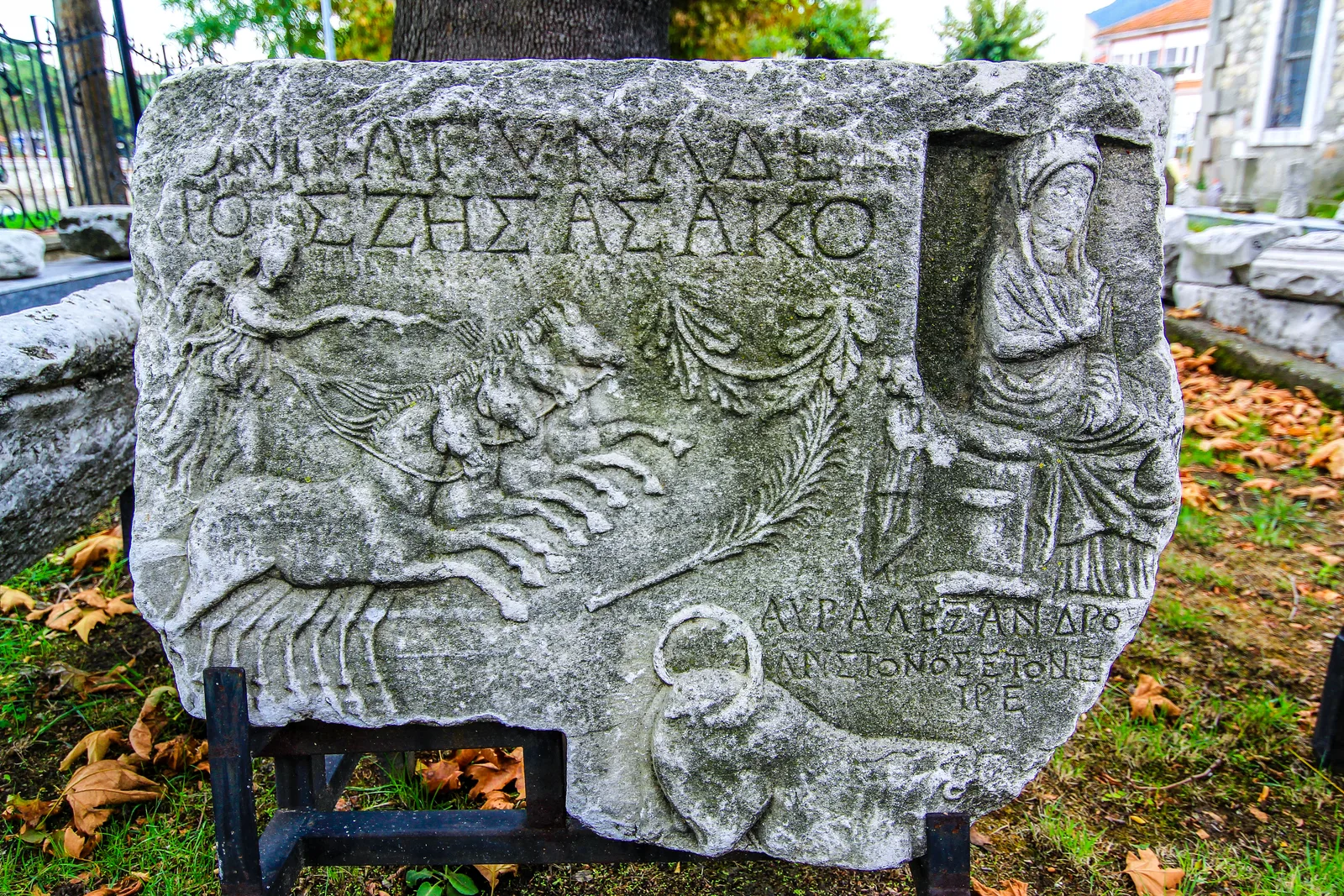 Story
Story Retracing the Footsteps of the Past at Amasra Museum
A Hadrian torso, Roman amphorae, bronze coins and an ancient garden: Amasra Museum's stone building on the Small Harbour shore preserves thousands of years of the city's memory.
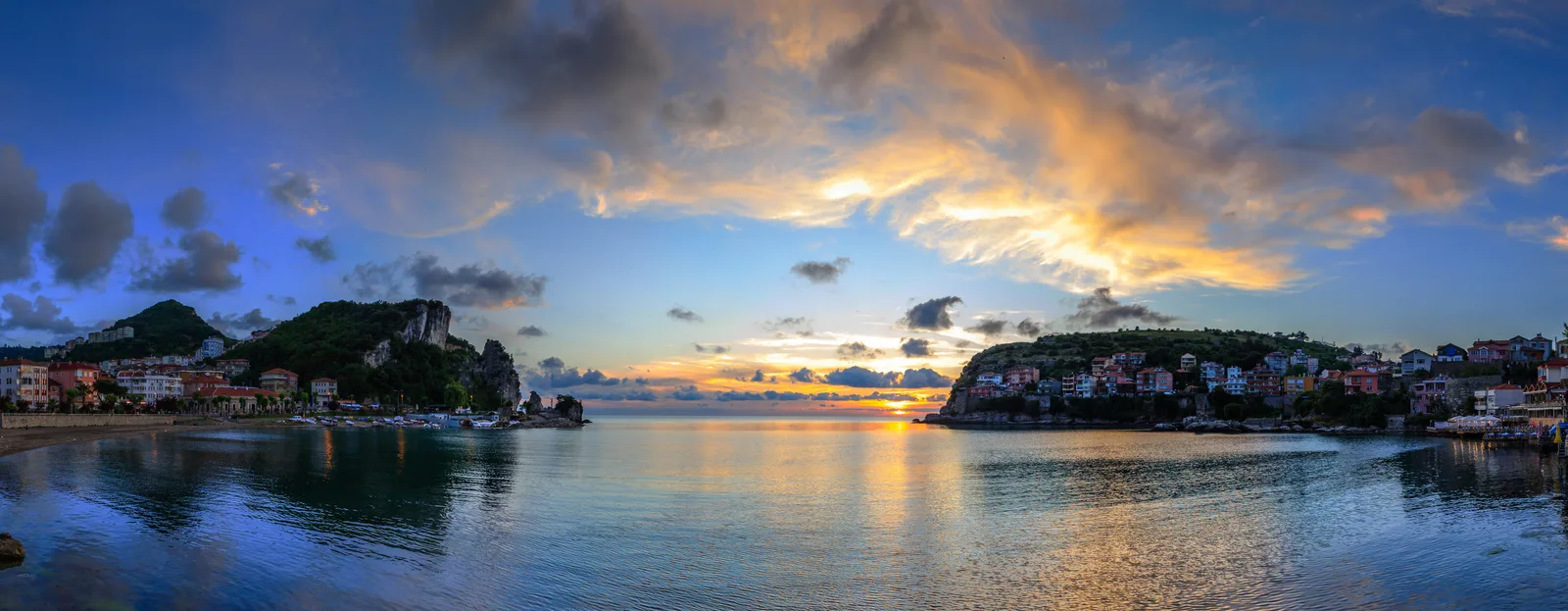 Story
Story A Black Sea Tale in the Shadow of Clouds: Amasra
Sunlight filtering through storm clouds turns the Black Sea into a living painting.