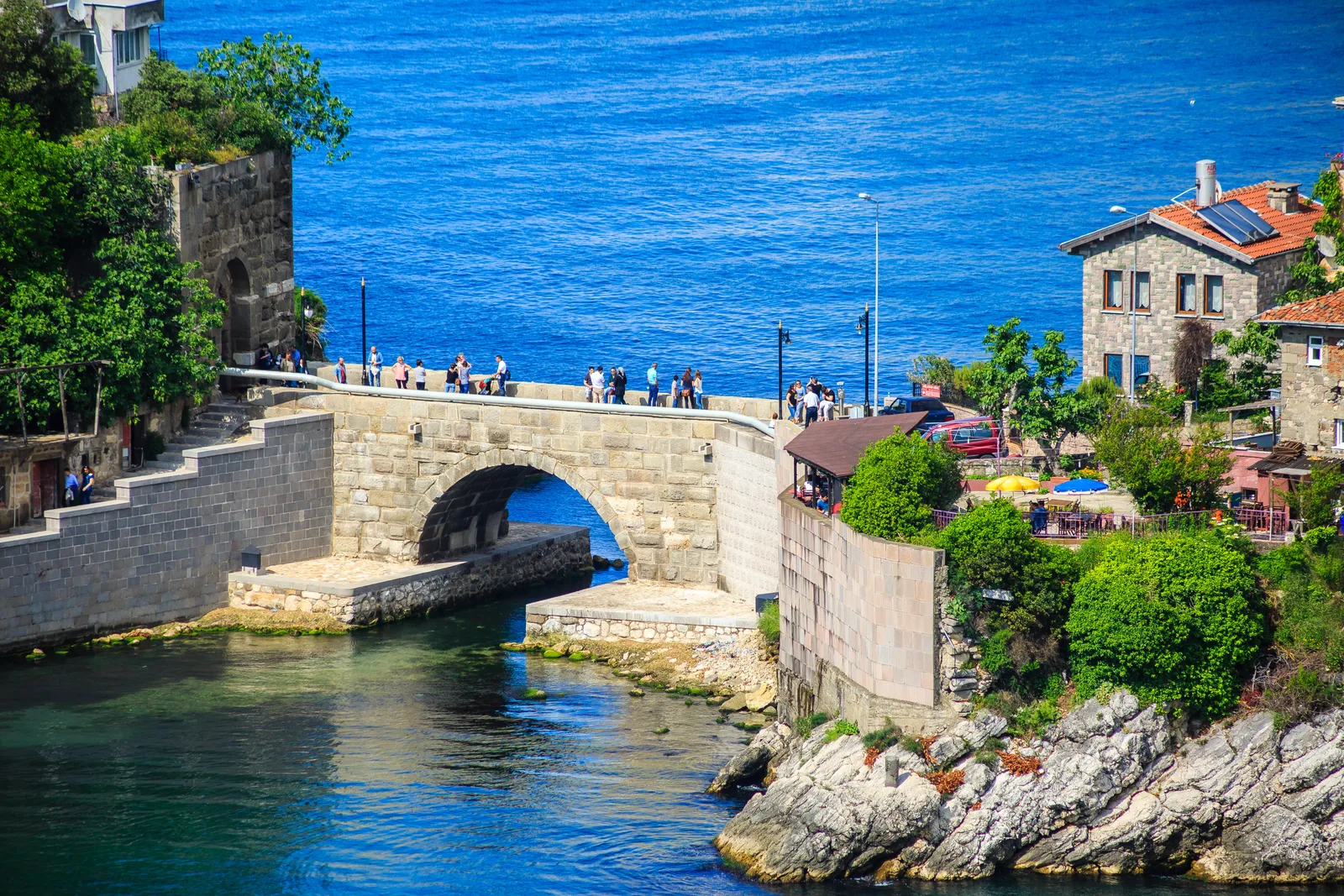
Kemere Bridge
Amasra Center, Amasra
Open for crossing at all times
The Roman Gateway to the Peninsula
Amasra is technically a peninsula; its connection to the mainland runs across a narrow neck of land. The bridge across that neck is Kemere Bridge. This stone arch bridge, linking the Sormagir and Boztepe districts, was built in the Roman period and remains open to pedestrians and vehicles to this day.
A Living Roman Legacy
Unlike many of Amasra’s historic structures, Kemere Bridge is not a “ruin”: people still cross it on a structure built 2,000 years ago. This makes it one of Turkey’s most remarkable examples of a living Roman heritage.
Because the bridge has remained in use, it has been restored at various points across the centuries. However, the fundamental stone arch structure has largely preserved its original character.
The Historical Context of the Bridge
The original construction of the bridge is associated with the urban development works carried out in Amasra during the reign of Roman Emperor Trajan (AD 98–117). The city’s theatre, forum and water systems were also built or completed in the same period.
The bridge tower — the section referred to in that era as the “Dark Place Gate” — was built by Roman legionary units.
Photography Angle
Kemere Bridge is one of Amasra’s most photographed spots. In particular, the view from under the bridge looking towards the Small Harbour in the early morning hours — when the water reflects the bridge arch — offers a remarkable composition. At sunset, the view looking out towards the Black Sea from the north side of the bridge is breathtaking.
Distances
- Amasra Museum: 3 minutes on foot
- Amasra Castle: 7 minutes on foot
- Small Harbour restaurants: 5 minutes on foot
Where to stay and eat in Amasra
1 / 10