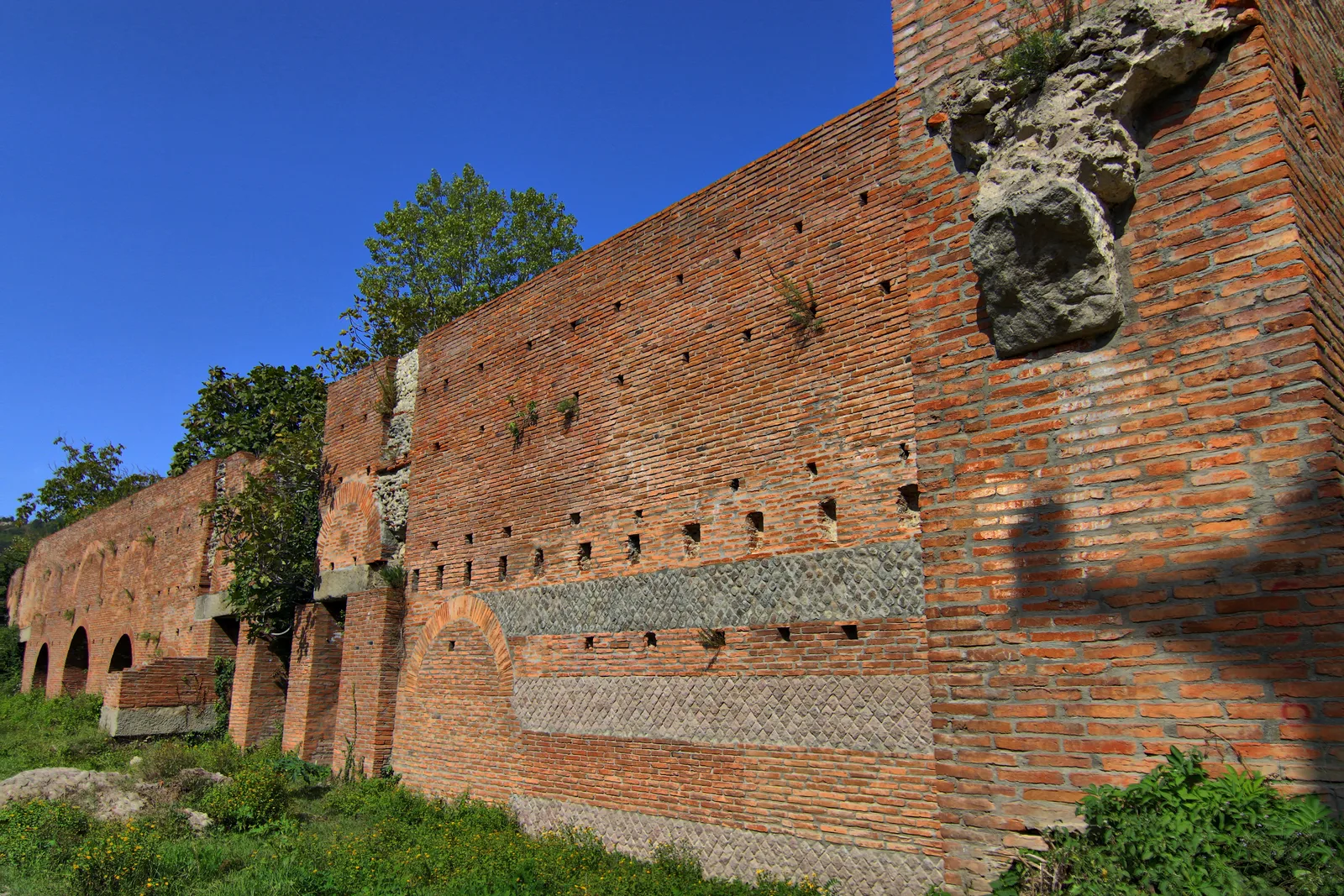
Bedesten (Roman Basilica)
Amasra Center, Amasra
Open daily
The Heart of Ancient Amastris
Known today as the Bedesten, this structure was the most important public building of Roman-era Amastris — the ancient name of Amasra. Built towards the end of the 1st century AD and the beginning of the 2nd, it most likely served as the Roman Provincial Council Hall (Bouleuterion or Basilica).
Emperor Trajan and Amasra’s Golden Age
During the reign of Roman Emperor Trajan (AD 98–117), Amastris was reshaped as a major metropolis. A forum, theatre, acropolis, ceremonial road, and water and sewage systems were all built or completed in this period.
These urban works were recorded in detail by Pliny the Younger, then governor of Bithynia-Pontus, in letters to the emperor. Written in AD 111–113, Pliny’s letters contain brief but invaluable historical observations on the general appearance and upkeep of Amasra at the time.
Dimensions and Architecture
Built to a basilica plan, the Bedesten measures:
- Dimensions: 18 × 45 metres
- Naves: 5
- Materials: Brick and stone
It has been suggested that the building may also have served as a gymnasium, Roman bath or commercial space. The name “Bedesten” — meaning covered bazaar — most likely reflects its commercial use in later centuries.
Current State
A portion of the brick walls still stands. Restoration work carried out in recent years has opened the site to visitors.
Most of Amasra’s visible historic monuments belong to the Genoese or Ottoman periods. The Bedesten connects the city to a far deeper past — directly to Roman civilisation. An especially rewarding stop for history enthusiasts.
Where to stay and eat in Amasra
1 / 5